What is a Bear Market? Meaning, Causes & Investment Strategy
A bear market can shake investors' confidence. Prices fall, headlines turn negative, and every decision feels risky, especially if you’re new to investing. This blog breaks it down, what is a bear market, what causes a bear market, and how you should act as an investor during this phase.
What is Bear Market?
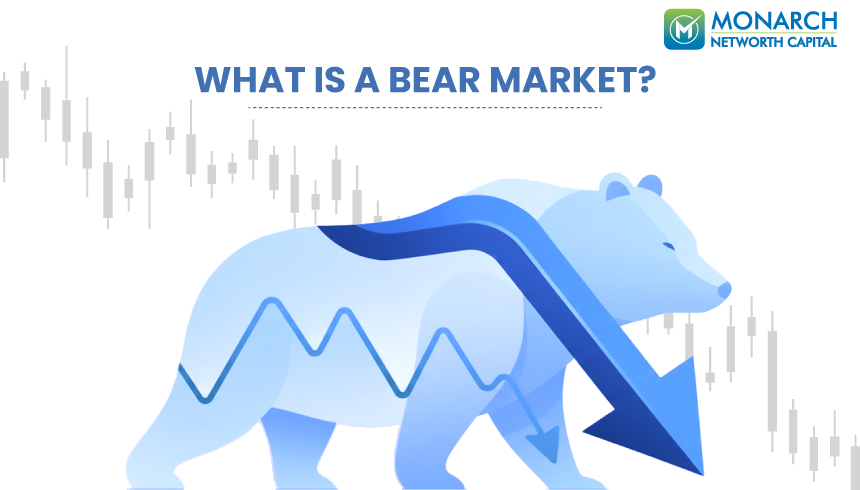
A bear market is the phase investors fear the most. It’s when stock prices fall sharply, confidence breaks, and bad news seems endless. Technically, a bear market is said to begin when major indices fall 20% or more from their recent highs and stay weak for a sustained period. To navigate these downturns effectively, learning how to analyse stocks, fundamentals, charts, and market trends is crucial for distinguishing between a temporary dip and a long-term reversal.
But beyond numbers, a bear market is really about sentiment. Fear replaces optimism, and protecting capital becomes more important than chasing returns. In a bear market, investors expect prices to fall further. This leads to selling pressure, lower trading volumes, and rising volatility.
What Causes a Bear Market?
Bear markets don’t appear overnight, usually triggered by a mix of economic, financial, and psychological factors.
- Economic slowdown or recession: When GDP growth weakens, unemployment rises and consumer spending falls, company profits suffer. Lower earnings directly hit stock prices.
- Rising interest rates: Central banks like RBI or US Fed raise rates to control inflation. Higher rates increase borrowing costs for businesses and consumers, reduce profitability, and make fixed-income options like bonds more attractive than equities.
- Global Events: Shocks such as wars, financial crises, pandemics, or banking failures. Events like the 2008 global financial crisis or 2020 COVID crash shook markets worldwide.
- Overvaluation and bubbles: When stock prices rise far ahead of earnings, reality eventually catches up. Once expectations break, panic selling starts.
What Happens During Bear Market?
During bear market, stock prices fall across sectors though impact is uneven. Cyclical sectors like real estate, metals and automobiles usually suffer more, though niche segments often highlighted in auto ancillaries sector analysis may show divergent trends. Defensive sectors such as FMCG, healthcare and utilities fall less.
Many investors move money to safer assets like fixed deposits, bonds, or diversify by understanding silver as an asset class alongside gold. IPO activity slows down. Volatility increases, and daily market swings become sharper. While long-term investors hold steady, this heightened volatility often attracts active traders using a swing trading complete guide to navigate the sharper daily movements. Emotionally, bear markets are tough. Fear, uncertainty, and negative headlines dominate.
How Should Investors Behave in a Bear Market?
- Avoid panic selling. Exiting quality investments after a sharp fall often converts temporary losses into permanent ones.
- Stay disciplined and stick to your long-term goals instead of reacting to short-term market noise.
- Continue systematic investing; understanding the dynamics of SIP vs lumpsum becomes vital here, as SIPs help you buy more units at lower prices.
- Use this phase to review portfolio quality. Weak companies may struggle to recover, while strong businesses with healthy cash flows tend to bounce back.
- Maintain diversification across asset classes to reduce the impact of prolonged market downturns.
Is a Bear Market a Bad Time to Invest?
It feels uncomfortable, but bear markets often create the best long-term opportunities. Many strong stocks become available at reasonable or even cheap valuations. Investors who stay invested or gradually increase exposure during bear phases often benefit the most when markets recover.
Bear Market vs Correction
| Criteria | Market Correction | Bear Market |
|---|---|---|
| Typical fall | Around 10% from recent highs | 20% or more from recent highs |
| Duration | Short-term | Usually longer and prolonged |
| Market sentiment | Temporary fear or profit booking | Deep pessimism and loss of confidence |
| Impact on fundamentals | Mostly unchanged | Often reflects weakening fundamentals |
| Frequency | Common and healthy | Rarer but more painful and stressful |
Conclusion
A bear market tests an investor’s mindset more than their strategy. Prices fall, confidence breaks, and fear dominates. But history shows that markets reward patience and discipline. Those who respect risk, stay invested wisely and avoid emotional decisions often emerge stronger when the cycle turns.
FAQs
- Is a bear market the same as a recession?
No, they are not thae same. A bear market is a sharp fall in stock prices, while a recession is an economic slowdown measured through GDP, jobs and production. - How long does a bear market usually last?
There is no fixed duration. Some last a few months while others can continue for years, depending on economic conditions. - Should I stop investing during a bear market?
Not necessarily. Continuing SIPs and focusing on quality investments can help you benefit from lower prices and long-term recovery.
Related Reading
- "If you are new to market cycles, this comprehensive guide lays the foundation for long-term wealth creation."
Stock Market Basics: A Beginner's Guide to Building Wealth - "Deciding how to deploy capital during a downturn is critical; this comparison helps you choose the right path."
SIP vs Lumpsum: Which Investment Option is Best? - "Master the art of identifying quality stocks that can withstand bear market pressures."
How to Analyse Stocks: Fundamentals & Market Trends
Disclaimer: This blog is for educational purposes only and does not constitute investment advice, an offer to buy/sell securities, or a recommendation. Past performance is not indicative of future results. Investors should consult a SEBI-registered advisor before making decisions. Mention of third-party entities is for illustration only and not an endorsement. Readers are advised to consult their financial advisors or conduct independent research before making any investment decisions. Past performance is not indicative of future results. MNCL is a SEBI-registered intermediary (SEBI Registration No: INZ000008037). For further details, visit www.sebi.gov.in.