Technology has changed how we do everything, from ordering food and shopping to navigating traffic and banking. So why should trading be any different today?
Algorithmic trading, commonly known as algo trading, has rapidly moved from institutional circles into the hands of retail investors. Yet, despite its growing popularity, many seasoned market participants are still unsure what it actually means or how it works.
This article will break down the basics of algo trading, how it functions, common strategies involved, and the pros and cons to be aware of. So whether you're a beginner or an experienced investor exploring automation for the first time, this guide will help you decide if it's the right fit for your investment style.
Algo trading is the process of using computer programs or algorithms to execute trades automatically. But first, it’s important to understand what an algorithm is. An algorithm is a set of step-by-step rules or instructions designed to solve a problem or make a decision.
In the context of algo trading, it means telling a computer exactly what to do when certain market conditions are met. Here, algorithms follow a defined set of instructions based on variables like price, timing, volume, or technical indicators.
Instead of placing buy or sell orders manually, you pre-set your strategy, and the system executes trades when those exact conditions are met. It's trading without human intervention but still with human logic behind the scenes.
At the heart of algo trading lies a set of rules written in code. These rules or instructions can be as simple as:
To understand how algo trading works better, here’s a simplified breakdown:
While there are dozens of models, here are a few commonly used algo trading strategies:
Some pros of algo trading include:
While algo trading has several advantages, it’s not without certain cons that you should be aware of:
Disclaimer Algo trading involves significant risk of loss and may not be suitable for all investors.
Yes, algo trading is legal in India. The Securities and Exchange Board of India (SEBI) regulates the use of algorithmic trading, especially among brokers and institutional participants. Retail investors can also use algo trading, provided it complies with broker and exchange guidelines. However, fully automated execution without human intervention may require specific approvals, depending on the platform and the strategy being used.
It’s essential to trade through SEBI-registered brokers and use platforms that follow exchange rules.
The answer to this depends on your trading personality and strategy.
If you’re comfortable with technology and want to remove emotions from your trades, algo trading can bring potential benefits. However, if you prefer a hands-on, intuitive approach, or if you’re not ready to trust automation with real money, you may want to start with semi-automated tools or paper trading.
Even experienced investors are now adopting hybrid models: manual decision-making supported by algorithmic execution. The key is to start small, understand your strategy deeply, and scale only when confident.
Several Indian and global platforms now offer DIY algo trading solutions for retail investors. While picking a platform for algo trading, here’s what you should look for:
Ultimately, choose a platform that aligns with your trading style, tech comfort level, and budget. It’s also important to remember that the platform is only as good as the strategy behind it.
Algo trading isn’t just a technological upgrade or a buzzword; it represents a relevant shift in how retail investors think about participation, automation, and discipline.
While it removes human error from execution, algo trading still demands human intelligence in planning. Your success will still depend on how well you understand your strategy, manage your risks, and respond to changing market conditions.
When it comes to algo trading, it’s crucial to start small, use backtesting, track performance, and learn continuously. Whether you’re automating a simple moving average strategy or building a more complex system, remember: the algorithm simply follows your logic. If your logic is flawed, automation will only amplify the mistake.
In the end, algo trading can be a powerful tool but it’s not a shortcut or a magic wand. And just like any tool, it works best in skilled hands.
Disclaimer
This blog is for educational purposes only and does not constitute investment advice, an offer to buy/sell securities, or a recommendation. Past performance is not indicative of future results. Investors should consult a SEBI-registered advisor before making decisions. Mention of third-party entities is for illustration only and not an endorsement.
Readers are advised to consult their financial advisors or conduct independent research before making any investment decisions. Past performance is not indicative of future results. MNCL is a SEBI-registered intermediary (SEBI Registration No: INZ000008037). For further details, visit www.sebi.gov.in.



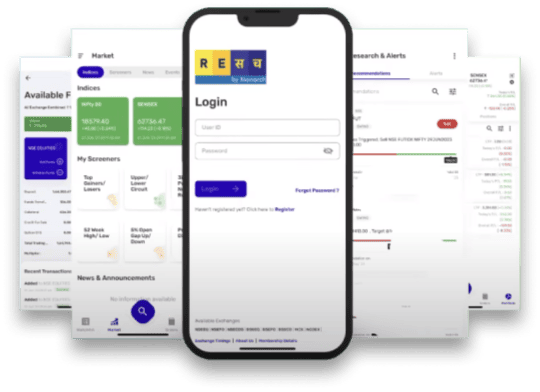
Empower your finances with ReSach – the stock trading apptrusted by serious investors. Whether you're planning to invest in stocks, explore commodity trading, or need a financial advisor to guide you, Resach brings it all under one platform.
Start trading today with ReSach and unlock seamless investing on the go.
Name of the Company has changed from Networth Stock Broking Limited to Monarch Networth Capital Limited upon Certification of Incorporation received from Registrar of Companies, Mumbai vide certificate dated 13th October, 2015.
If you are not satisfied with the resolution provided, you can lodge your complaint online at: https://scores.sebi.gov.in/link
In case of grievance client can log on to the SMART ODR Portal, if they are unsatisfied with the response provided by us. Your attention is drawn to the SEBI circular no. SEBI/HO/OIAE/OIAE_IAD-1/P/CIR/2023/131 dated July 31, 2023, on “Online Resolution of Disputes in the Indian Securities Market”.
Purchase of REs only gives buyer the right to participate in the ongoing Rights Issue of the concerned company by making an application with requisite application money or renounce the REs before the issue closes. REs which are neither subscribed by making an application with requisite application money nor renounced, on or before the Issue closing date shall lapse and shall be extinguished after the Issue closing date. Please check your dp account for further details.
Please do not share your online trading password with anyone as this could weaken the security of your account and lead to unauthorized trades or losses.
Monarch Networth Capital Limited (‘MNCL’) | CIN No.: L64990GJ1993PLC120014
Unit No. 803-804A, 8th Floor, X-Change Plaza, Block No. 53, Zone 5, Road-5E, Gift City, Gandhinagar - 382050, Gujarat
Ahmedabad
“Monarch House”, Opp Prahladbhai Patel garden, Near Ishwar Bhuvan, Commerce Six Roads, Navrangpura, Ahmedabad - 380009
Mumbai
Monarch Networth Capital Limited, G Block, Laxmi Tower, B Wing, 4th Floor, Bandra Kurla Complex, Bandra East, Mumbai - 400051.
Email for Grievance: grievances@mnclgroup.com
Investors are requested to note that Stock broker (Monarch Networth Capital Ltd) is permitted to receive money from investors through designated bank accounts only named as Up streaming Client Nodal Bank Account (USCNBA). Stock broker (Monarch Networth Capital Ltd) is also required to disclose these USCNB accounts to Stock Exchange. Hence, you are requested to use following USCNB accounts only (Click to View) for the purpose of dealings in your trading account with us. The details of these USCNB accounts are also displayed by Stock Exchanges on their website under “Know/ Locate your Stock Broker".
Mechanism for addressing grievances and information about SCORES.
Monarch Networth Capital IFSC Private Limited (Wholly owned subsidiary of Monarch Networth Capital Limited) is a Registered Fund Management Entity (Retail) having Registration No: IFSCA/FME/III/2025-26/169. Monarch India Growth Fund will be an open-ended Restricted Scheme (Non-Retail) construed as a Category III AIF under the IFSCA (Fund Management) Regulations, 2025. Monarch AIF is a Category III AIF having SEBI Registration No. IN/AIF3/20-21/0787. This material is for informational purposes only and is not intended as an offer or solicitation or investment advice to buy or sell securities. Investments are subject to market risks. The offering is made only through official scheme documents to eligible investors under GIFT IFSC regulations. Investors should read all documents carefully and consult their advisors before investing.
Mechanism for addressing grievances and information about SCORES.
Monarch Networth Capital Limited (‘MNCL’) | CIN No.: L64990GJ1993PLC120014
(As per LODR Regulations and Companies Act, 2013)
Contact information of the designated officials of the listed entity who are responsible for assisting and handling investor grievances : Mr. Nitesh Tanwar
Monarch Networth Capital Limited
Unit No. 803-804A, 8th Floor, X-Change Plaza, Block No. 53, Zone 5, Road-5E, Gift City, Gandhinagar - 382050, Gujarat
Ahmedabad
“Monarch House”, Opp Prahladbhai Patel garden, Near Ishwar Bhuvan, Commerce Six Roads, Navrangpura, Ahmedabad – 380009
Mumbai
Monarch Networth Capital Limited, G Block, Laxmi Tower, B Wing, 4th Floor, Bandra Kurla Complex, Bandra East, Mumbai - 400051.
Phone: 022 - 66476400 / 66476405
Email: cs@mnclgroup.com
Email for Grievance: cs@mnclgroup.com
Listing of Equity Shares on Stock Exchange at
BSE
NSE
(Formerly known as Link Intime India Private Limited)
For any queries related to broking please contact helpdesk@mnclgroup.com.
‘Investments in securities market are subject to market risks, read all the related documents carefully before investing.’