Trading isn’t just about numbers; it’s a psychological battlefield where your mindset can be the deciding factor between success and failure. According to a Dalbar Inc. study, the average investor underperforms the market by almost 4-5% annually, largely due to emotionally driven decisions.
Fear and greed here become one of the powerful market emotions, where it is responsible for taking some worst decisions like early exit, chasing hype, or ignoring risks. No matter how good your strategy is, you cannot manage your emotions, and that is only a matter of time that has to be taken care of.
Jesse Livermore nailed it by saying; Markets may change, but human behavior doesn’t. If you want long-term success, mastering emotional control is not optional; it’s essential.
Decisions made under the influence of emotions may result in a situation where traders do not carry out the plans they've devised. Traits such as greed and fear are to blame for most emotional impairments that a trader may face:
In such a situation, many people might not follow the stop-loss levels or might not follow the trading systems' signals.
As per an expert, "The best strategies are useless in the absence of emotional control, especially when the market is volatile, and thereby simply fail."
The first step toward mastering your emotions is recognizing the cognitive biases that influence your behavior:
These biases are mental shortcuts your brain uses to make quick decisions, but in the world of trading, they often cause more harm than good.
Want to dive deeper into how traders and investors think differently?
Read this breakdown on the Psychology of a Trader vs an Investor — and discover how your mindset shapes not just your trades, but your entire investing journey.
Managing emotions is all about consistency, discipline, and self-awareness. Here are practical ways to stay in control:
Train your mind. Trade with tools that reduce emotion.
Open trading account with ReSach now
Below are some more ways to make sure that your state of mind is sharp:
MNCL’s in-depth research reports, personalized guidance throughout your investment journey, and robust client tools are designed to help you reduce impulsive decisions and focus on long-term success.
The difference between the good and the bad traders is not just in their ability to trade; rather, it’s in their ability to control their emotions. If you can master fear and greed, you will be able to adhere to your plan, preserve your capital, and maintain rational thought in times of volatility.
If you're ready to trade smarter, not just harder, and want guidance backed by research and real-world expertise, For SEBI-regulated services, visit mnclgroup.com
Explore insights, analysis, and services designed to keep you grounded, no matter how wild the markets get.
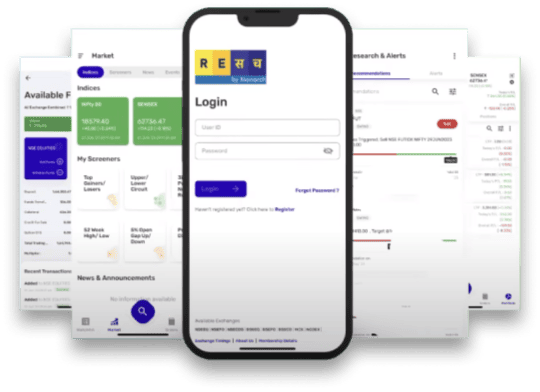
Ready to trade without emotional bias? Use Monarch’s ReSach to stay in control .
General Disclaimer: https://www.mnclgroup.com/storage/general-disclaimer-mncl.pdf
Research-related Disclaimer: https://www.mnclgroup.com/storage/mncl-research-related-disclaimer.pdf
Trading involves risks; capital loss is possible. Read all the necessary disclaimers and documents carefully before investing.



Empower your finances with ReSach – the stock trading apptrusted by serious investors. Whether you're planning to invest in stocks, explore commodity trading, or need a financial advisor to guide you, Resach brings it all under one platform.
Start trading today with ReSach and unlock seamless investing on the go.
Name of the Company has changed from Networth Stock Broking Limited to Monarch Networth Capital Limited upon Certification of Incorporation received from Registrar of Companies, Mumbai vide certificate dated 13th October, 2015.
If you are not satisfied with the resolution provided, you can lodge your complaint online at: https://scores.sebi.gov.in/link
In case of grievance client can log on to the SMART ODR Portal, if they are unsatisfied with the response provided by us. Your attention is drawn to the SEBI circular no. SEBI/HO/OIAE/OIAE_IAD-1/P/CIR/2023/131 dated July 31, 2023, on “Online Resolution of Disputes in the Indian Securities Market”.
Purchase of REs only gives buyer the right to participate in the ongoing Rights Issue of the concerned company by making an application with requisite application money or renounce the REs before the issue closes. REs which are neither subscribed by making an application with requisite application money nor renounced, on or before the Issue closing date shall lapse and shall be extinguished after the Issue closing date. Please check your dp account for further details.
Please do not share your online trading password with anyone as this could weaken the security of your account and lead to unauthorized trades or losses.
Monarch Networth Capital Limited (‘MNCL’) | CIN No.: L64990GJ1993PLC120014
Unit No. 803-804A, 8th Floor, X-Change Plaza, Block No. 53, Zone 5, Road-5E, Gift City, Gandhinagar - 382050, Gujarat
Ahmedabad
“Monarch House”, Opp Prahladbhai Patel garden, Near Ishwar Bhuvan, Commerce Six Roads, Navrangpura, Ahmedabad - 380009
Mumbai
Monarch Networth Capital Limited, G Block, Laxmi Tower, B Wing, 4th Floor, Bandra Kurla Complex, Bandra East, Mumbai - 400051.
Email for Grievance: grievances@mnclgroup.com
Investors are requested to note that Stock broker (Monarch Networth Capital Ltd) is permitted to receive money from investors through designated bank accounts only named as Up streaming Client Nodal Bank Account (USCNBA). Stock broker (Monarch Networth Capital Ltd) is also required to disclose these USCNB accounts to Stock Exchange. Hence, you are requested to use following USCNB accounts only (Click to View) for the purpose of dealings in your trading account with us. The details of these USCNB accounts are also displayed by Stock Exchanges on their website under “Know/ Locate your Stock Broker".
Mechanism for addressing grievances and information about SCORES.
Monarch Networth Capital IFSC Private Limited (Wholly owned subsidiary of Monarch Networth Capital Limited) is a Registered Fund Management Entity (Retail) having Registration No: IFSCA/FME/III/2025-26/169. Monarch India Growth Fund will be an open-ended Restricted Scheme (Non-Retail) construed as a Category III AIF under the IFSCA (Fund Management) Regulations, 2025. Monarch AIF is a Category III AIF having SEBI Registration No. IN/AIF3/20-21/0787. This material is for informational purposes only and is not intended as an offer or solicitation or investment advice to buy or sell securities. Investments are subject to market risks. The offering is made only through official scheme documents to eligible investors under GIFT IFSC regulations. Investors should read all documents carefully and consult their advisors before investing.
Mechanism for addressing grievances and information about SCORES.
Monarch Networth Capital Limited (‘MNCL’) | CIN No.: L64990GJ1993PLC120014
(As per LODR Regulations and Companies Act, 2013)
Contact information of the designated officials of the listed entity who are responsible for assisting and handling investor grievances : Mr. Nitesh Tanwar
Monarch Networth Capital Limited
Unit No. 803-804A, 8th Floor, X-Change Plaza, Block No. 53, Zone 5, Road-5E, Gift City, Gandhinagar - 382050, Gujarat
Ahmedabad
“Monarch House”, Opp Prahladbhai Patel garden, Near Ishwar Bhuvan, Commerce Six Roads, Navrangpura, Ahmedabad – 380009
Mumbai
Monarch Networth Capital Limited, G Block, Laxmi Tower, B Wing, 4th Floor, Bandra Kurla Complex, Bandra East, Mumbai - 400051.
Phone: 022 - 66476400 / 66476405
Email: cs@mnclgroup.com
Email for Grievance: cs@mnclgroup.com
Listing of Equity Shares on Stock Exchange at
BSE
NSE
(Formerly known as Link Intime India Private Limited)
For any queries related to broking please contact helpdesk@mnclgroup.com.
‘Investments in securities market are subject to market risks, read all the related documents carefully before investing.’