
Succession planning is about making sure your business keeps running smoothly even when leadership changes. For HNIs, it is not just a business decision. It is a wealth decision. It helps pass on ownership, control or both without chaos, disputes or value loss.
Whether it is a family-run firm or a business built over decades, a clear succession plan protects what you have created. In this blog, we will cover what succession planning means, why it matters for HNIs and how the right structure can protect both business continuity and personal wealth.
Business succession planning is simply about getting ready for the day when the current owner steps aside, a process that may benefit from expert corporate advisory and restructuring. For HNIs, the business is often a major part of their wealth, so deciding who will take charge next matters a lot. It could be the next generation or a professional leader who can run the business well.
In a family business, succession planning also means grooming the successor in advance. They are well trained, tested and slowly given responsibility, which avoids sudden shocks and keeps operations smooth. And when done in right way, then integrated professional portfolio management and succession frameworks work together to protect control, value, and long-term stability.
Source: IIFL
In India, a large share of businesses are family-owned and many still operate without written succession frameworks. Lack of planning often leads to family disputes, business disruption and fragmentation of assets when the founder is no longer around.
For HNIs, succession planning is not just about “who gets what”, but about governance, tax efficiency and continuity of control. Utilizing sophisticated vehicles like Alternative Investment Funds can also play a crucial role in preserving capital across generations. Proper planning can reduce litigation risk and support smoother leadership transitions in operating companies.
To make succession smooth, HNIs can use a few well-known legal tools. Each one plays a different role.
Will: A simplest way to decide how assets will be distributed after death. It provides legal clarity, but since it goes through probate, the process can be slow and sometimes lead to disputes among heirs.
Trust: It offers more control & flexibility than a will. It allows assets to be transferred and managed smoothly, usually with tax efficiency and protection from legal claims. Many wealthy families use trusts to ensure wealth passes on without delays while supporting long-term goals.
Family Agreement: It sets clear rules for managing family owned business. It defines roles, decision-making powers and how conflicts will be handled. This helps avoid misunderstandings and keeps the business running smoothly across generations.
Source: Agama law
Many HNIs have built their businesses from scratch and stepping back is not easy. And this emotional bond usually delays decisions or leads to half-hearted handovers.
In family businesses, picking a successor can create tension, especially when more than one person wants the role. Without clear and fair communication, these issues can spill into the business.
Succession is often pushed to “later.” But life is unpredictable. Without early planning, sudden events can put both the business and its value at risk. Starting early makes the transition smoother and calmer.
Source: IIFL
Is there inheritance tax on succession in India?
At present, India does not impose inheritance tax on wealth passed at death. However selling inherited assets can trigger capital gains tax based on the original owner’s cost and holding period.
Source: PNB Metlife
Why are family trusts popular among Indian HNIs?
Trusts allow wealth to be passed on during one’s lifetime, with control still in the family’s hands. Trusts let families decide how and when assets are used, while protecting younger members and promoting financial independence for women within the family structure. Since trusts avoid probate, transfers are faster and more private, which makes them a preferred choice for business families focused on continuity & legal safety.
Source: Money control
Secure your legacy with a structured approach to wealth and business transition.
Disclaimer: This blog is for educational purposes only and does not constitute investment advice, an offer to buy/sell securities, or a recommendation. Past performance is not indicative of future results. Investors should consult a SEBI-registered advisor before making decisions. Mention of third-party entities is for illustration only and not an endorsement. Readers are advised to consult their financial advisors or conduct independent research before making any investment decisions. Past performance is not indicative of future results. MNCL is a SEBI-registered intermediary (SEBI Registration No: INZ000008037). For further details, visit www.sebi.gov.in.



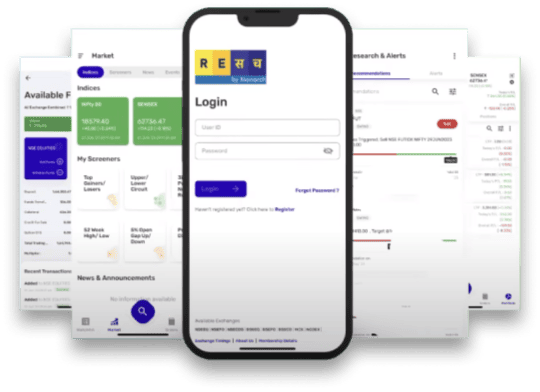
Empower your finances with ReSach – the stock trading apptrusted by serious investors. Whether you're planning to invest in stocks, explore commodity trading, or need a financial advisor to guide you, Resach brings it all under one platform.
Start trading today with ReSach and unlock seamless investing on the go.
Name of the Company has changed from Networth Stock Broking Limited to Monarch Networth Capital Limited upon Certification of Incorporation received from Registrar of Companies, Mumbai vide certificate dated 13th October, 2015.
If you are not satisfied with the resolution provided, you can lodge your complaint online at: https://scores.sebi.gov.in/link
In case of grievance client can log on to the SMART ODR Portal, if they are unsatisfied with the response provided by us. Your attention is drawn to the SEBI circular no. SEBI/HO/OIAE/OIAE_IAD-1/P/CIR/2023/131 dated July 31, 2023, on “Online Resolution of Disputes in the Indian Securities Market”.
Purchase of REs only gives buyer the right to participate in the ongoing Rights Issue of the concerned company by making an application with requisite application money or renounce the REs before the issue closes. REs which are neither subscribed by making an application with requisite application money nor renounced, on or before the Issue closing date shall lapse and shall be extinguished after the Issue closing date. Please check your dp account for further details.
Please do not share your online trading password with anyone as this could weaken the security of your account and lead to unauthorized trades or losses.
Monarch Networth Capital Limited (‘MNCL’) | CIN No.: L64990GJ1993PLC120014
Unit No. 803-804A, 8th Floor, X-Change Plaza, Block No. 53, Zone 5, Road-5E, Gift City, Gandhinagar - 382050, Gujarat
Ahmedabad
“Monarch House”, Opp Prahladbhai Patel garden, Near Ishwar Bhuvan, Commerce Six Roads, Navrangpura, Ahmedabad - 380009
Mumbai
Monarch Networth Capital Limited, G Block, Laxmi Tower, B Wing, 4th Floor, Bandra Kurla Complex, Bandra East, Mumbai - 400051.
Email for Grievance: grievances@mnclgroup.com
Investors are requested to note that Stock broker (Monarch Networth Capital Ltd) is permitted to receive money from investors through designated bank accounts only named as Up streaming Client Nodal Bank Account (USCNBA). Stock broker (Monarch Networth Capital Ltd) is also required to disclose these USCNB accounts to Stock Exchange. Hence, you are requested to use following USCNB accounts only (Click to View) for the purpose of dealings in your trading account with us. The details of these USCNB accounts are also displayed by Stock Exchanges on their website under “Know/ Locate your Stock Broker".
Mechanism for addressing grievances and information about SCORES.
Monarch Networth Capital IFSC Private Limited (Wholly owned subsidiary of Monarch Networth Capital Limited) is a Registered Fund Management Entity (Retail) having Registration No: IFSCA/FME/III/2025-26/169. Monarch India Growth Fund will be an open-ended Restricted Scheme (Non-Retail) construed as a Category III AIF under the IFSCA (Fund Management) Regulations, 2025. Monarch AIF is a Category III AIF having SEBI Registration No. IN/AIF3/20-21/0787. This material is for informational purposes only and is not intended as an offer or solicitation or investment advice to buy or sell securities. Investments are subject to market risks. The offering is made only through official scheme documents to eligible investors under GIFT IFSC regulations. Investors should read all documents carefully and consult their advisors before investing.
Mechanism for addressing grievances and information about SCORES.
Monarch Networth Capital Limited (‘MNCL’) | CIN No.: L64990GJ1993PLC120014
(As per LODR Regulations and Companies Act, 2013)
Contact information of the designated officials of the listed entity who are responsible for assisting and handling investor grievances : Mr. Nitesh Tanwar
Monarch Networth Capital Limited
Unit No. 803-804A, 8th Floor, X-Change Plaza, Block No. 53, Zone 5, Road-5E, Gift City, Gandhinagar - 382050, Gujarat
Ahmedabad
“Monarch House”, Opp Prahladbhai Patel garden, Near Ishwar Bhuvan, Commerce Six Roads, Navrangpura, Ahmedabad – 380009
Mumbai
Monarch Networth Capital Limited, G Block, Laxmi Tower, B Wing, 4th Floor, Bandra Kurla Complex, Bandra East, Mumbai - 400051.
Phone: 022 - 66476400 / 66476405
Email: cs@mnclgroup.com
Email for Grievance: cs@mnclgroup.com
Listing of Equity Shares on Stock Exchange at
BSE
NSE
(Formerly known as Link Intime India Private Limited)
For any queries related to broking please contact helpdesk@mnclgroup.com.
‘Investments in securities market are subject to market risks, read all the related documents carefully before investing.’