
Mutual funds have become one of the most popular ways for Indians to grow their wealth, without spending hours tracking stocks every day. But with so many options, equity, debt, hybrid, index, SIPs, choosing the right one can be confusing. In this blog, you’ll learn how to choose best mutual funds that suit your financial goals, risk appetite and investment style.
First, ask yourself: Why am I investing? Retirement, buying a house, children’s education or wealth creation? Your goal determines the type of mutual fund and investment duration.
Your risk tolerance is key. If market ups and downs make you anxious then debt or hybrid funds are safer. If you can handle market volatility, equity funds can give better long term returns.
Every investment carries risk. Debt funds are safer with lower returns while equity funds are riskier but can offer higher growth. Asset allocation helps balance risk & return based on your goals. If you are comfortable taking more risk then invest more in equities and if you prefer stability, allocate a higher share to debt funds.
While past performance doesn’t guarantee future returns, checking how a fund has done over 3–5 years helps gauge consistency. Compare it with similar funds and its benchmark. If it hasn’t beaten the benchmark over 3, 5, 7 or 10 years, it may not be a strong performer. Also, don’t rely only on CAGR, check rolling returns to see how steady the fund’s performance is.
Many investors ignore fund’s investment strategy but it’s crucial. It shows how the fund house invests your money. If approach doesn’t match your style, you might panic & exit at the wrong time. For example, if you prefer stability but pick an aggressive small cap fund, short term losses might scare you. So always choose funds that match your risk and goals.
A good fund manager can make a big difference, especially in actively managed funds. Always check the manager’s experience and track record. Also, see whether the past returns belong to the current fund manager or the previous one. When a new manager takes over, the fund’s risk taking style and investment philosophy can change.
Mutual funds come with expense ratio which is yearly fee you pay for fund management. The lower this ratio, the more of your money stays invested and earns returns. Index funds usually have lower costs compared to actively managed funds.
Entry load is a fee that used to be charged when you invested in a mutual fund. But now, most fund houses have removed it. Exit load is fee you pay if you withdraw your investment before a certain period, usually within a few months or a year. It’s meant to discourage quick exits. As an investor, choose mutual funds that have low or no entry and exit loads, so more of your money stays invested.
Mutual funds come in two types, Direct and Regular. In direct plans, you invest directly with the fund house, so no commission which gives slightly higher returns. Regular plans go through a broker or distributor, who earns a small 1–1.25% commission, slightly reducing returns. Earlier, investors preferred regular plans due to limited awareness but now, with online platforms and information available, investing directly is easier and more confident.
Once you know how to choose the right mutual fund, the next step is to decide how to invest, either through SIP investment or lump sum. With SIP you invest fixed amount regularly. This helps you benefit from rupee cost averaging and the power of compounding over time. If you already have a large amount ready to invest, you can go for a lump sum investment based on your asset allocation and financial goals.
Choosing mutual funds is simple. Identify your financial goals, know your risk appetite and pick funds that match both. Regular SIPs, diversification and patience help build wealth. Mutual funds grow best long term and even small, consistent investments can create significant returns.
Disclaimer:
This blog is for educational purposes only and does not constitute investment advice, an offer to buy/sell securities, or a recommendation. Past performance is not indicative of future results. Investors should consult a SEBI-registered advisor before making decisions. Mention of third-party entities is for illustration only and not an endorsement. Readers are advised to consult their financial advisors or conduct independent research before making any investment decisions. Past performance is not indicative of future results. MNCL is a SEBI-registered intermediary (SEBI Registration No: INZ000008037). For further details, visit www.sebi.gov.in.



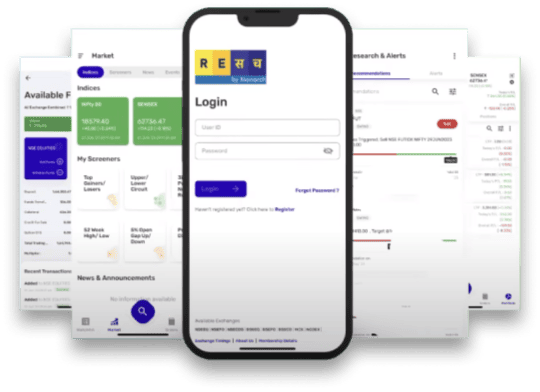
Empower your finances with ReSach – the stock trading apptrusted by serious investors. Whether you're planning to invest in stocks, explore commodity trading, or need a financial advisor to guide you, Resach brings it all under one platform.
Start trading today with ReSach and unlock seamless investing on the go.
Name of the Company has changed from Networth Stock Broking Limited to Monarch Networth Capital Limited upon Certification of Incorporation received from Registrar of Companies, Mumbai vide certificate dated 13th October, 2015.
If you are not satisfied with the resolution provided, you can lodge your complaint online at: https://scores.sebi.gov.in/link
In case of grievance client can log on to the SMART ODR Portal, if they are unsatisfied with the response provided by us. Your attention is drawn to the SEBI circular no. SEBI/HO/OIAE/OIAE_IAD-1/P/CIR/2023/131 dated July 31, 2023, on “Online Resolution of Disputes in the Indian Securities Market”.
Purchase of REs only gives buyer the right to participate in the ongoing Rights Issue of the concerned company by making an application with requisite application money or renounce the REs before the issue closes. REs which are neither subscribed by making an application with requisite application money nor renounced, on or before the Issue closing date shall lapse and shall be extinguished after the Issue closing date. Please check your dp account for further details.
Please do not share your online trading password with anyone as this could weaken the security of your account and lead to unauthorized trades or losses.
Monarch Networth Capital Limited (‘MNCL’) | CIN No.: L64990GJ1993PLC120014
Unit No. 803-804A, 8th Floor, X-Change Plaza, Block No. 53, Zone 5, Road-5E, Gift City, Gandhinagar - 382050, Gujarat
Ahmedabad
“Monarch House”, Opp Prahladbhai Patel garden, Near Ishwar Bhuvan, Commerce Six Roads, Navrangpura, Ahmedabad - 380009
Mumbai
Monarch Networth Capital Limited, G Block, Laxmi Tower, B Wing, 4th Floor, Bandra Kurla Complex, Bandra East, Mumbai - 400051.
Email for Grievance: grievances@mnclgroup.com
Investors are requested to note that Stock broker (Monarch Networth Capital Ltd) is permitted to receive money from investors through designated bank accounts only named as Up streaming Client Nodal Bank Account (USCNBA). Stock broker (Monarch Networth Capital Ltd) is also required to disclose these USCNB accounts to Stock Exchange. Hence, you are requested to use following USCNB accounts only (Click to View) for the purpose of dealings in your trading account with us. The details of these USCNB accounts are also displayed by Stock Exchanges on their website under “Know/ Locate your Stock Broker".
Mechanism for addressing grievances and information about SCORES.
Monarch Networth Capital IFSC Private Limited (Wholly owned subsidiary of Monarch Networth Capital Limited) is a Registered Fund Management Entity (Retail) having Registration No: IFSCA/FME/III/2025-26/169. Monarch India Growth Fund will be an open-ended Restricted Scheme (Non-Retail) construed as a Category III AIF under the IFSCA (Fund Management) Regulations, 2025. Monarch AIF is a Category III AIF having SEBI Registration No. IN/AIF3/20-21/0787. This material is for informational purposes only and is not intended as an offer or solicitation or investment advice to buy or sell securities. Investments are subject to market risks. The offering is made only through official scheme documents to eligible investors under GIFT IFSC regulations. Investors should read all documents carefully and consult their advisors before investing.
Mechanism for addressing grievances and information about SCORES.
Monarch Networth Capital Limited (‘MNCL’) | CIN No.: L64990GJ1993PLC120014
(As per LODR Regulations and Companies Act, 2013)
Contact information of the designated officials of the listed entity who are responsible for assisting and handling investor grievances : Mr. Nitesh Tanwar
Monarch Networth Capital Limited
Unit No. 803-804A, 8th Floor, X-Change Plaza, Block No. 53, Zone 5, Road-5E, Gift City, Gandhinagar - 382050, Gujarat
Ahmedabad
“Monarch House”, Opp Prahladbhai Patel garden, Near Ishwar Bhuvan, Commerce Six Roads, Navrangpura, Ahmedabad – 380009
Mumbai
Monarch Networth Capital Limited, G Block, Laxmi Tower, B Wing, 4th Floor, Bandra Kurla Complex, Bandra East, Mumbai - 400051.
Phone: 022 - 66476400 / 66476405
Email: cs@mnclgroup.com
Email for Grievance: cs@mnclgroup.com
Listing of Equity Shares on Stock Exchange at
BSE
NSE
(Formerly known as Link Intime India Private Limited)
For any queries related to broking please contact helpdesk@mnclgroup.com.
‘Investments in securities market are subject to market risks, read all the related documents carefully before investing.’