For many investors, an IPO is the first step into the stock market. When a company goes public and sells its shares to the public for the first time, allowing retail investors, institutions and high-net-worth individuals to participate in its growth. Understanding IPO application Process, how IPO works helps investors apply confidently and increases the chances of IPO allotment.
IPO or Initial Public Offering, happens when a private/ public unlisted company sells its shares to the public for the first time on a stock exchange. This is called going public, as ownership moves from private hands like founders, family members or angel investors to the public.
Through an IPO, a company can raise money to expand its business, launch new projects or repay loans. It also allows early investors to sell some of their shares and earn profits.
IPO doesn’t happen instantly. Usually, a company works with investment banks to prepare financial documents, get approvals from regulators like SEBI, create a prospectus for investors and promote the IPO to generate interest.
Here’s a step-by-step look at the IPO application process in India
The first step is to appoint lead managers, also called Book Running Lead Managers (BRLMs), usually merchant bankers or investment banks. They guide the company through the IPO by studying its financials, suggesting the price band, handling regulatory filings with SEBI and exchanges, promoting the IPO to investors and underwriting unsold shares. For large IPOs, multiple lead managers may be appointed.
Next, the company files a DRHP with SEBI. This document contains details like the company’s background, promoters, business model, financial statements, risks and use of funds.
Before an IPO opens, the company usually spends about two weeks marketing it to investors, especially large institutions (QIBs) in major financial cities. During this phase, executives present key facts and financials to generate interest. Sometimes, big investors are also given a chance to buy shares at fixed price before the IPO officially goes public.
Once SEBI approves, the company and underwriters decide whether the IPO will be a:
IPO process begins with anchor investors (large institutions) placing their bids one working day before the public. After this, the IPO is opened to retail and other investors, with the bidding window typically lasting three working days. Investors then apply for shares within the specified price band through their brokers or banks.
Get IPO-ready with MNCL
Open your Demat account and invest from Day 1.
After the bidding ends, the company finalizes share allotment. In oversubscribed IPOs, shares are allotted via lottery, while in undersubscribed cases, applicants usually get full allotment. Refunds are processed for those who don’t get shares and allotted shares are credited to Demat accounts within 10 working days.
The company’s shares are then listed on NSE and/or BSE. The listing price depends on demand, high demand may lead to a premium listing, while low demand can result in a par or discounted listing.
After an IPO, the company must regularly share financial updates and annual reports with shareholders, stock exchanges and regulators. This ensures transparency and helps everyone track company’s performance.
Participating in an IPO can be an exciting way to invest in a company’s growth from the very beginning. Understanding the IPO application process helps investors apply confidently, while knowing how IPO allotment works prepares them for the chances of receiving shares. Though IPOs carry risks, careful research, timely applications and awareness of allotment patterns can increase your chances of success.
Yes, IPOs can be a good starting point for beginners, but understanding the company, its financials and market conditions is essential before applying.
Yes, once shares are allotted and credited to your Demat account, then you can sell them on the stock exchange after listing.
No, IPOs are not guaranteed to be profitable. Returns depend on company fundamentals, market demand and post-listing performance.



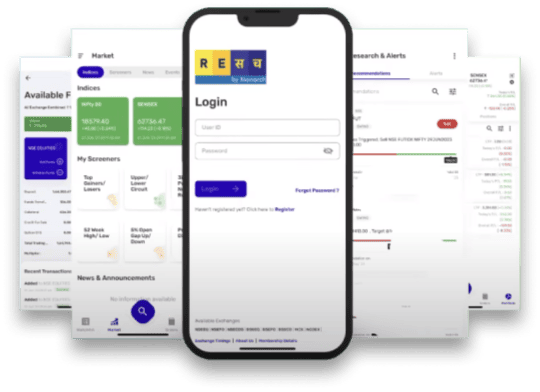
Empower your finances with ReSach – the stock trading apptrusted by serious investors. Whether you're planning to invest in stocks, explore commodity trading, or need a financial advisor to guide you, Resach brings it all under one platform.
Start trading today with ReSach and unlock seamless investing on the go.
Name of the Company has changed from Networth Stock Broking Limited to Monarch Networth Capital Limited upon Certification of Incorporation received from Registrar of Companies, Mumbai vide certificate dated 13th October, 2015.
If you are not satisfied with the resolution provided, you can lodge your complaint online at: https://scores.sebi.gov.in/link
In case of grievance client can log on to the SMART ODR Portal, if they are unsatisfied with the response provided by us. Your attention is drawn to the SEBI circular no. SEBI/HO/OIAE/OIAE_IAD-1/P/CIR/2023/131 dated July 31, 2023, on “Online Resolution of Disputes in the Indian Securities Market”.
Purchase of REs only gives buyer the right to participate in the ongoing Rights Issue of the concerned company by making an application with requisite application money or renounce the REs before the issue closes. REs which are neither subscribed by making an application with requisite application money nor renounced, on or before the Issue closing date shall lapse and shall be extinguished after the Issue closing date. Please check your dp account for further details.
Please do not share your online trading password with anyone as this could weaken the security of your account and lead to unauthorized trades or losses.
Monarch Networth Capital Limited (‘MNCL’) | CIN No.: L64990GJ1993PLC120014
Unit No. 803-804A, 8th Floor, X-Change Plaza, Block No. 53, Zone 5, Road-5E, Gift City, Gandhinagar - 382050, Gujarat
Ahmedabad
“Monarch House”, Opp Prahladbhai Patel garden, Near Ishwar Bhuvan, Commerce Six Roads, Navrangpura, Ahmedabad - 380009
Mumbai
Monarch Networth Capital Limited, G Block, Laxmi Tower, B Wing, 4th Floor, Bandra Kurla Complex, Bandra East, Mumbai - 400051.
Email for Grievance: grievances@mnclgroup.com
Investors are requested to note that Stock broker (Monarch Networth Capital Ltd) is permitted to receive money from investors through designated bank accounts only named as Up streaming Client Nodal Bank Account (USCNBA). Stock broker (Monarch Networth Capital Ltd) is also required to disclose these USCNB accounts to Stock Exchange. Hence, you are requested to use following USCNB accounts only (Click to View) for the purpose of dealings in your trading account with us. The details of these USCNB accounts are also displayed by Stock Exchanges on their website under “Know/ Locate your Stock Broker".
Mechanism for addressing grievances and information about SCORES.
Monarch Networth Capital IFSC Private Limited (Wholly owned subsidiary of Monarch Networth Capital Limited) is a Registered Fund Management Entity (Retail) having Registration No: IFSCA/FME/III/2025-26/169. Monarch India Growth Fund will be an open-ended Restricted Scheme (Non-Retail) construed as a Category III AIF under the IFSCA (Fund Management) Regulations, 2025. Monarch AIF is a Category III AIF having SEBI Registration No. IN/AIF3/20-21/0787. This material is for informational purposes only and is not intended as an offer or solicitation or investment advice to buy or sell securities. Investments are subject to market risks. The offering is made only through official scheme documents to eligible investors under GIFT IFSC regulations. Investors should read all documents carefully and consult their advisors before investing.
Mechanism for addressing grievances and information about SCORES.
Monarch Networth Capital Limited (‘MNCL’) | CIN No.: L64990GJ1993PLC120014
(As per LODR Regulations and Companies Act, 2013)
Contact information of the designated officials of the listed entity who are responsible for assisting and handling investor grievances : Mr. Nitesh Tanwar
Monarch Networth Capital Limited
Unit No. 803-804A, 8th Floor, X-Change Plaza, Block No. 53, Zone 5, Road-5E, Gift City, Gandhinagar - 382050, Gujarat
Ahmedabad
“Monarch House”, Opp Prahladbhai Patel garden, Near Ishwar Bhuvan, Commerce Six Roads, Navrangpura, Ahmedabad – 380009
Mumbai
Monarch Networth Capital Limited, G Block, Laxmi Tower, B Wing, 4th Floor, Bandra Kurla Complex, Bandra East, Mumbai - 400051.
Phone: 022 - 66476400 / 66476405
Email: cs@mnclgroup.com
Email for Grievance: cs@mnclgroup.com
Listing of Equity Shares on Stock Exchange at
BSE
NSE
(Formerly known as Link Intime India Private Limited)
For any queries related to broking please contact helpdesk@mnclgroup.com.
‘Investments in securities market are subject to market risks, read all the related documents carefully before investing.’