Every year, companies from different industries enter the stock market through IPOs, creating excitement among both seasoned investors and first time participants. This raises an important question, why do companies go public? Because launching an IPO is a milestone for any business, as it allows them to raise capital by offering shares to the public. More importantly, going public brings long term advantages that go beyond just funding growth. In this blog, we’ll explore the key reasons companies go public, the benefits of going public and how IPO proceeds can support a company’s growth.
Companies generally decide to go public for several important reasons like:
One of the most common reasons behind IPOs is expansion. A company that has grown steadily in its private phase often reaches a point where it needs large scale funding to move to the next level. Whether it’s entering new markets, increasing production capacity, investing in technology or launching new products, expansion requires capital.
By going public, companies get access to a wide pool of investors. Unlike private funding, which relies on venture capitalists or a limited number of investors, IPOs open the door to millions of retail and institutional investors. The inflow of capital can help your businesses to
Another important reason companies opt for IPOs is debt repayment. Many businesses, especially those in capital intensive industries like manufacturing, infrastructure and telecom, rely heavily on loans to fund their initial growth. Over time, rising interest costs can eat profits and affect financial stability.
Through an IPO, companies can raise money to repay existing debt. This helps them reduce the burden of interest payments, improve cash flow & strengthen the balance sheet. A debt free or low debt company is also more attractive to investors because it shows financial discipline and stability.
Going public isn’t only about raising capital, it also boosts a company’s profile. An IPO puts the business in the spotlight, drawing attention from analysts, media, regulators and potential customers.
Listing on a stock exchange enhances visibility and strengthens brand recognition. Many consumer focused companies use IPOs as a branding tool. In India, being listed on NSE or BSE instantly adds credibility with customers, suppliers and even prospective employees.
Few benefits of increased visibility through IPOs include
Private companies often struggle with fair valuation since their worth is usually based on private negotiations or funding rounds. IPO changes this, when a private company launches an IPO, investment bankers and underwriters set the initial share price through a comprehensive valuation process that considers financials, growth prospects, market conditions and investor feedback (often via book-building).
After listing, the stock market set the company’s valuation, based on demand and supply along with its business performance. Going public also provides liquidity through which founders, early investors and venture capitalists can partially exit their holdings, while new investors gain an opportunity to join the company’s growth story.
Don’t just watch IPOs, own them – Open your Demat account with MNCL.
IPO is far more than just a way to raise funds, it marks a defining milestone in a company’s journey. By going public, businesses unlock opportunities for expansion, debt reduction, better visibility and transparent valuation. For companies, it strengthens finances, expands global reach and builds brand trust. For investors, it offers a chance to participate in early growth stories.



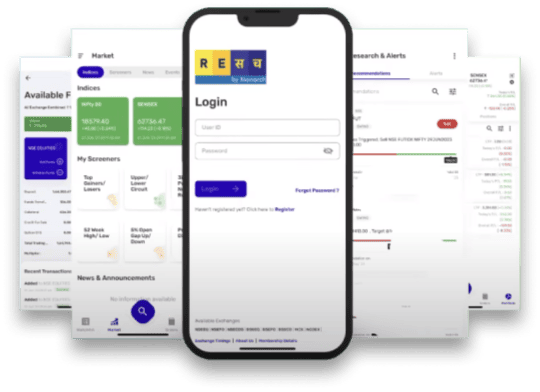
Empower your finances with ReSach – the stock trading apptrusted by serious investors. Whether you're planning to invest in stocks, explore commodity trading, or need a financial advisor to guide you, Resach brings it all under one platform.
Start trading today with ReSach and unlock seamless investing on the go.
Name of the Company has changed from Networth Stock Broking Limited to Monarch Networth Capital Limited upon Certification of Incorporation received from Registrar of Companies, Mumbai vide certificate dated 13th October, 2015.
If you are not satisfied with the resolution provided, you can lodge your complaint online at: https://scores.sebi.gov.in/link
In case of grievance client can log on to the SMART ODR Portal, if they are unsatisfied with the response provided by us. Your attention is drawn to the SEBI circular no. SEBI/HO/OIAE/OIAE_IAD-1/P/CIR/2023/131 dated July 31, 2023, on “Online Resolution of Disputes in the Indian Securities Market”.
Purchase of REs only gives buyer the right to participate in the ongoing Rights Issue of the concerned company by making an application with requisite application money or renounce the REs before the issue closes. REs which are neither subscribed by making an application with requisite application money nor renounced, on or before the Issue closing date shall lapse and shall be extinguished after the Issue closing date. Please check your dp account for further details.
Please do not share your online trading password with anyone as this could weaken the security of your account and lead to unauthorized trades or losses.
Monarch Networth Capital Limited (‘MNCL’) | CIN No.: L64990GJ1993PLC120014
Unit No. 803-804A, 8th Floor, X-Change Plaza, Block No. 53, Zone 5, Road-5E, Gift City, Gandhinagar - 382050, Gujarat
Ahmedabad
“Monarch House”, Opp Prahladbhai Patel garden, Near Ishwar Bhuvan, Commerce Six Roads, Navrangpura, Ahmedabad - 380009
Mumbai
Monarch Networth Capital Limited, G Block, Laxmi Tower, B Wing, 4th Floor, Bandra Kurla Complex, Bandra East, Mumbai - 400051.
Email for Grievance: grievances@mnclgroup.com
Investors are requested to note that Stock broker (Monarch Networth Capital Ltd) is permitted to receive money from investors through designated bank accounts only named as Up streaming Client Nodal Bank Account (USCNBA). Stock broker (Monarch Networth Capital Ltd) is also required to disclose these USCNB accounts to Stock Exchange. Hence, you are requested to use following USCNB accounts only (Click to View) for the purpose of dealings in your trading account with us. The details of these USCNB accounts are also displayed by Stock Exchanges on their website under “Know/ Locate your Stock Broker".
Mechanism for addressing grievances and information about SCORES.
Monarch Networth Capital IFSC Private Limited (Wholly owned subsidiary of Monarch Networth Capital Limited) is a Registered Fund Management Entity (Retail) having Registration No: IFSCA/FME/III/2025-26/169. Monarch India Growth Fund will be an open-ended Restricted Scheme (Non-Retail) construed as a Category III AIF under the IFSCA (Fund Management) Regulations, 2025. Monarch AIF is a Category III AIF having SEBI Registration No. IN/AIF3/20-21/0787. This material is for informational purposes only and is not intended as an offer or solicitation or investment advice to buy or sell securities. Investments are subject to market risks. The offering is made only through official scheme documents to eligible investors under GIFT IFSC regulations. Investors should read all documents carefully and consult their advisors before investing.
Mechanism for addressing grievances and information about SCORES.
Monarch Networth Capital Limited (‘MNCL’) | CIN No.: L64990GJ1993PLC120014
(As per LODR Regulations and Companies Act, 2013)
Contact information of the designated officials of the listed entity who are responsible for assisting and handling investor grievances : Mr. Nitesh Tanwar
Monarch Networth Capital Limited
Unit No. 803-804A, 8th Floor, X-Change Plaza, Block No. 53, Zone 5, Road-5E, Gift City, Gandhinagar - 382050, Gujarat
Ahmedabad
“Monarch House”, Opp Prahladbhai Patel garden, Near Ishwar Bhuvan, Commerce Six Roads, Navrangpura, Ahmedabad – 380009
Mumbai
Monarch Networth Capital Limited, G Block, Laxmi Tower, B Wing, 4th Floor, Bandra Kurla Complex, Bandra East, Mumbai - 400051.
Phone: 022 - 66476400 / 66476405
Email: cs@mnclgroup.com
Email for Grievance: cs@mnclgroup.com
Listing of Equity Shares on Stock Exchange at
BSE
NSE
(Formerly known as Link Intime India Private Limited)
For any queries related to broking please contact helpdesk@mnclgroup.com.
‘Investments in securities market are subject to market risks, read all the related documents carefully before investing.’