We engaged with ICT vendors and channel partners to assess the ground-level demand–supply dynamics across PCs, mobiles, and components. Retailer feedback indicates an acute RAM shortage, with prices up ~3x YoY (majority of it coming in Q3) as supply has shifted toward large data centre customers. While distributors have passed on higher prices, end customers are cutting order volumes leading to inventory build-up at channel partners. Storage and CPU supply tightness is also emerging. PC prices are up ~10% QoQ. Elevated PC and memory prices should support margins for Rashi (50%+ PC revenue; 10%+ RAM and storage), while Redington is unlikely to see any negative impact given adequate inventory levels.
Prices of key PC and server components, particularly storage and memory, have surged with RAM prices surging 2-3x over the past few months. While distributors have largely been able to pass these higher prices to their channel partners, volumes have declined materially due to affordability constraints. While impact maybe lower in Q3 (soft quarter volume-wise for distributors), we could see some negative impact in Q4 unless the supply issue is resolved. There is no new capacity expected for RAMs in CY26, which indicates that the issue could persist for a couple of quarters.
Enterprise customers are delaying procurement decisions, while SMEs remain cautious due to limited visibility on how long elevated prices will sustain. Even where higher costs are passed through order sizes are being reduced impacting throughput and sales velocity. Government demand has also softened with several GeM orders from recent months either delayed or sent back for budget reallocation. Overall, channel partners expect these conditions to persist at least until March, with improvement dependent on OEM allocation decisions and data centre demand normalization.
Given peripherals account for ~45–50% of Rashi’s revenues, the company should benefit from component price hikes, with higher ASPs supporting margins in H2. Rising PC prices also aid Rashi and Redington (PC contribution: 50–55% and 20–25%, respectively), as we have not seen volume pressure in Q3. The AI PC trend remains muted despite 20–25% YoY price declines. If component prices continue to rise, PC prices could increase 20%+ over CY26, potentially impacting volumes across distributors. We remain constructive on the medium-term refresh cycle, with no structural margin risk, though near-term volumes may remain uneven. We will continue to monitor inventory levels, pricing trends, and OEM supply allocation.
Rashi Peripherals - we are factoring 12.2%/21.5%/14.9% CAGR in Revenue/EBITDA/PAT over FY25-28E; Redington - our estimates are at 14.0%/18.6%/22.1% CAGR in Revenue/EBITDA/PAT over FY25-FY28E. Prefer Rashi Peripherals (as play on refresh / AI PC cycle) and Redington for cloud and software segment. Key risks: prolonged period of elevated RAM prices, slower than expected pick at enterprise segment.

Click to download the full report on Information and Communication Technology (ICT) - Sector Update
The channel checks were conducted to assess ground-level demand and supply dynamics across PCs, mobiles, and key components by engaging with ICT vendors and channel partners.
An acute shortage of RAM has emerged, with prices rising around 2–3x YoY, largely driven by supply being diverted toward large data centre customers.
PC prices have increased by approximately 10% QoQ, driven by sharp increases in memory and storage prices.
Distributors have largely passed on higher component prices to channel partners, but end customers are reducing order volumes due to affordability constraints.
Higher prices have led to a material decline in order volumes, resulting in inventory build-up at channel partners.
Yes, with no new RAM capacity expected in CY26, the supply tightness and pricing pressure could persist for the next couple of quarters.
Enterprise customers are delaying purchases, SMEs remain cautious, and government demand has weakened with several GeM orders being delayed or reallocated.
Channel partners expect the current disruption to persist at least until March, with recovery dependent on OEM supply allocation and normalization of data centre demand.
Given peripherals account for around 45–50% of revenues, higher component prices and rising PC ASPs are expected to support margins for Rashi in H2.
Redington is unlikely to see a negative impact in the near term due to adequate inventory levels and its exposure to cloud and software segments.
If component prices continue to rise, PC prices could increase by more than 20% over CY26, which may impact volumes across distributors.
The medium-term refresh cycle remains constructive with no structural margin risk, although near-term volumes may remain uneven.
Key risks include a prolonged period of elevated RAM prices and a slower-than-expected recovery in enterprise demand.
Disclaimer: - You are advised to read our disclaimer here: https://www.mnclgroup.com/disclaimers



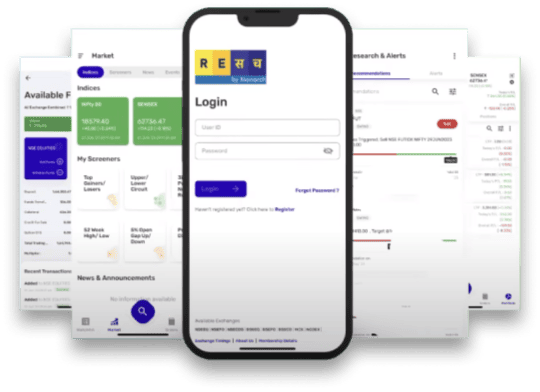
Empower your finances with ReSach – the stock trading apptrusted by serious investors. Whether you're planning to invest in stocks, explore commodity trading, or need a financial advisor to guide you, Resach brings it all under one platform.
Start trading today with ReSach and unlock seamless investing on the go.
Name of the Company has changed from Networth Stock Broking Limited to Monarch Networth Capital Limited upon Certification of Incorporation received from Registrar of Companies, Mumbai vide certificate dated 13th October, 2015.
If you are not satisfied with the resolution provided, you can lodge your complaint online at: https://scores.sebi.gov.in/link
In case of grievance client can log on to the SMART ODR Portal, if they are unsatisfied with the response provided by us. Your attention is drawn to the SEBI circular no. SEBI/HO/OIAE/OIAE_IAD-1/P/CIR/2023/131 dated July 31, 2023, on “Online Resolution of Disputes in the Indian Securities Market”.
Purchase of REs only gives buyer the right to participate in the ongoing Rights Issue of the concerned company by making an application with requisite application money or renounce the REs before the issue closes. REs which are neither subscribed by making an application with requisite application money nor renounced, on or before the Issue closing date shall lapse and shall be extinguished after the Issue closing date. Please check your dp account for further details.
Please do not share your online trading password with anyone as this could weaken the security of your account and lead to unauthorized trades or losses.
Monarch Networth Capital Limited (‘MNCL’) | CIN No.: L64990GJ1993PLC120014
Unit No. 803-804A, 8th Floor, X-Change Plaza, Block No. 53, Zone 5, Road-5E, Gift City, Gandhinagar - 382050, Gujarat
Ahmedabad
“Monarch House”, Opp Prahladbhai Patel garden, Near Ishwar Bhuvan, Commerce Six Roads, Navrangpura, Ahmedabad - 380009
Mumbai
Monarch Networth Capital Limited, G Block, Laxmi Tower, B Wing, 4th Floor, Bandra Kurla Complex, Bandra East, Mumbai - 400051.
Email for Grievance: grievances@mnclgroup.com
Investors are requested to note that Stock broker (Monarch Networth Capital Ltd) is permitted to receive money from investors through designated bank accounts only named as Up streaming Client Nodal Bank Account (USCNBA). Stock broker (Monarch Networth Capital Ltd) is also required to disclose these USCNB accounts to Stock Exchange. Hence, you are requested to use following USCNB accounts only (Click to View) for the purpose of dealings in your trading account with us. The details of these USCNB accounts are also displayed by Stock Exchanges on their website under “Know/ Locate your Stock Broker".
Mechanism for addressing grievances and information about SCORES.
Monarch Networth Capital IFSC Private Limited (Wholly owned subsidiary of Monarch Networth Capital Limited) is a Registered Fund Management Entity (Retail) having Registration No: IFSCA/FME/III/2025-26/169. Monarch India Growth Fund will be an open-ended Restricted Scheme (Non-Retail) construed as a Category III AIF under the IFSCA (Fund Management) Regulations, 2025. Monarch AIF is a Category III AIF having SEBI Registration No. IN/AIF3/20-21/0787. This material is for informational purposes only and is not intended as an offer or solicitation or investment advice to buy or sell securities. Investments are subject to market risks. The offering is made only through official scheme documents to eligible investors under GIFT IFSC regulations. Investors should read all documents carefully and consult their advisors before investing.
Mechanism for addressing grievances and information about SCORES.
Monarch Networth Capital Limited (‘MNCL’) | CIN No.: L64990GJ1993PLC120014
(As per LODR Regulations and Companies Act, 2013)
Contact information of the designated officials of the listed entity who are responsible for assisting and handling investor grievances : Mr. Nitesh Tanwar
Monarch Networth Capital Limited
Unit No. 803-804A, 8th Floor, X-Change Plaza, Block No. 53, Zone 5, Road-5E, Gift City, Gandhinagar - 382050, Gujarat
Ahmedabad
“Monarch House”, Opp Prahladbhai Patel garden, Near Ishwar Bhuvan, Commerce Six Roads, Navrangpura, Ahmedabad – 380009
Mumbai
Monarch Networth Capital Limited, G Block, Laxmi Tower, B Wing, 4th Floor, Bandra Kurla Complex, Bandra East, Mumbai - 400051.
Phone: 022 - 66476400 / 66476405
Email: cs@mnclgroup.com
Email for Grievance: cs@mnclgroup.com
Listing of Equity Shares on Stock Exchange at
BSE
NSE
(Formerly known as Link Intime India Private Limited)
For any queries related to broking please contact helpdesk@mnclgroup.com.
‘Investments in securities market are subject to market risks, read all the related documents carefully before investing.’