Goldiam International Ltd - Initiating Coverage Report

Overview : Goldiam International Limited is an Indian manufacturer and exporter of diamond-studded gold jewellery, serving global retailers, wholesalers and departmental stores, particularly in the US market. Its business spans natural and lab-grown diamond jewellery, with an emphasis on retail partnerships and e-commerce distribution.
MNCL presents an investment idea on Goldiam International with a fair value of ₹185. Its lab-grown diamond business, US retail partnerships and e-commerce-led strategy support growth and margin expansion. MNCL estimates FY22–25E revenue and EBITDA CAGR of 12% and 25%, respectively, with LGD emerging as a key growth driver.
We present an investment idea on Goldiam International Limited, a thinly researched stock with a fair value of Rs.185. Fortified by more than three decades of experience, the company is a leading supplier of exquisitely designed and luxurious diamond jewellery. The company has become the manufacturer of choice for many leading global branded retailers, departmental stores and wholesalers across America. Goldiam’s fortune changed when it became one of the first movers to grow and distribute lab-grown diamonds (LGD), which today contributes close to 20% of its overall topline. LGD has immense potential as we move towards an alternative to natural diamonds.
Key Investment Highlights
- Moving away from traditional channels to affluent channels- Goldiam International has always been ahead of the competition on innovation and overall strategy. What started as pure commodity play of cutting and polishing diamonds progressed to manufacturing diamond studded and gold jewellery. In short, it went from a wafer-thin margin business to a margin-accretive business. What changed the company's fortune was when it moved from traditional wholesale to retail channels. The traditional channel has a long credit cycle and lower margins, while a retail strategy is capital efficient and ensures quick turnaround and a better margin profile.
- Lab-based diamonds - shining bright- The company was one the first movers to lab-based diamonds and is one of few fully backwards-integrated companies. It currently contributes close to 20% of the overall revenue of the company (Natural Diamond margins-20% and LGD~35%). Lab-based diamonds enjoy higher margins and are currently the fastest-growing trend in the jewellery market. Due to their features, lab-based diamonds are similar to natural diamonds (certified as real diamonds) but cost significantly less, making them the preferred choice for many first-time and aspirational buyers.
- Stands out in an industry with a besmirched reputation - The jewellery industry has had its fair share of instances of value destruction (Gitanjali Gems, Winsome Diamonds, Nirav Modi etc.), the common thread being unmanageable debt and abysmal inventory management. In contrast, Goldiam is debt-free, has a strong dividend payout policy (50% of standalone PAT), done frequent buybacks and has a strong, independent board. It focuses more on the e-commerce channel with low credit and inventory risk.
- Valuation & Risks- Goldiam has a presence both in natural and lab-based diamonds, catering to the US, the most prominent jewellery market in the world. The company's innovative strategy to focus on direct retail and e-commerce platforms has paid rich dividends with robust growth in its margin profile. Its decision to move towards lab-based diamonds early has made it one of the most preferred vendors to US retailers. We expect the company to post revenue growth of 12% CAGR over FY22-25E to Rs.9,775mn, with lab-based diamonds to grow at 42% and natural diamonds at 2% over the same period. EBITDA over the same period is expected to grow at 25% CAGR to Rs.2,525mn, while OPM is expected to improve by 690bps to 25.8%. PAT is expected to grow at 25% CAGR to Rs. 2,065mn. We currently value the stock at 11x to arrive at our fair value target of Rs.185, a potential upside of 48% from current levels.
Key Data
| Fair value | 185 |
|---|---|
| CMP* | 127 |
| Upside | 48% |
| Bloomberg Code | GLDM:IN |
| Curr Shares O/S (mn) | 108.9 |
| Diluted Shares O/S(mn) | 108.9 |
| Mkt Cap (Rsbn/USDmn) | 14.05/171.3 |
| 52 Wk H / L (Rs) | 217/117 |
| 3M Average Vol. | 126211 |
Price Performance (%)
| 1M | 6M | 1Yr | |
|---|---|---|---|
| GOLDIAM | 2.5 | -5.9 | -37.3 |
| Nifty | 5.5 | 8.8 | -0.4 |
Source: Bloomberg, ACE Equity, MNCL Research
Shareholding pattern (%)
| Sep-22 | Jun-22 | Mar-22 | Dec-21 | |
|---|---|---|---|---|
| Promoter | 66.39 | 66.39 | 66.39 | 66.39 |
| DIIs | NIL | NIL | NIL | NIL |
| FIIs | NIL | NIL | NIL | NIL |
| Others | 33.53 | 33.61 | 33.61 | 33.61 |
Source: BSE
Why should you read this report?
- How the E-commerce segment is changing the fortunes
- Why lab-based diamonds
- How India is the chosen country for lab diamonds
| Y/E Mar (Rs mn) | Revenue | YoY (%) | EBITDA | EBITDA (%) | Adj PAT | YoY (%) | Adj EPS | RoE (%) | RoCE (%) | P/E (x) | EV/EBITDA (x) |
|---|---|---|---|---|---|---|---|---|---|---|---|
| FY21 | 4,060 | 11.4% | 781 | 19.2% | 671 | 48.1% | 6.2 | 14.4% | 16.5% | 20.4 | 14.3 |
| FY22 | 6,877 | 69.4% | 1,300 | 18.9% | 1,060 | 58.0% | 9.7 | 20.4% | 24.7% | 12.9 | 9.0 |
| FY23E | 5,785 | -15.9% | 1,349 | 23.3% | 1,160 | 9.5% | 10.6 | 19.6% | 22.9% | 11.8 | 7.8 |
| FY24E | 7,533 | 30.2% | 1,859 | 24.7% | 1,556 | 34.1% | 14.3 | 22.7% | 27.6% | 8.8 | 5.6 |
| FY25E | 9,775 | 29.8% | 2,525 | 25.8% | 2,065 | 32.7% | 18.9 | 25.7% | 32.2% | 6.6 | 4.0 |
Source: Company, MNCL Research estimates
Company website: https://www.goldiam.com/

Click to download the full Goldiam International Ltd IC Report
Analyst Coverage:
Rahul Dani
Vaidik Bafna
Moving Away From Traditional Channels- Leading to Better Operational Efficiency
Goldiam International has a niche business model in jewellery; it is an OEM to renowned global retailers. Goldiam manufactures the latest trend, high-value diamond-studded jewellery (engagement and anniversary rings, wedding bands, bridal sets, fashion pendants, necklaces, and earnings) in various designs and types and sells to leading global retailers, with a chain of stores as well as jewellery wholesalers, who, in turn, sell to smaller retailers.
Goldiam, which commenced operations in 1988, has established substantial brand equity and has received various awards from the government for being a pioneer and role model in jewellery exports.
Exhibit 1: Evolution of Goldiam

Text version of Exhibit 1
How it started – 1970 – 1990
- Goldiam International started exports of cut and polished diamonds in 1986.
- First Diamond cutting and jewellery manufacturing company in SEEPZ, Mumbai.
New Direction – 1995 – 2015
- Moving from commodity business of diamond manufacturing (cutting) to value added Diamond Jewellery Production & Wholesale.
- leveraged its expertise and started operations in the US (New York) as Goldiam USA Inc. to directly sell to global retailers.
Coming of Age – 2015-2018
- Amongst the first jewellery exporting companies to grow, manufacture and distribute LG Diamonds & Jewellery.
- Strategic Acquisition of Eco-Friendly Diamonds LLP (EDL) (88%) gives us access to supply of key raw materials for manufacturing and growing LGD
Stage set for the next level – 2018-2022
- Implementation of Omni channel strategy, which includes ecommerce drop shipments and B2B website (Jewel Fleet) to provide value-added, Omni-channel sales funnel to its customers
- Consolidation of stake in Eco-Friendly Diamonds LLP (EDL) to 88% & Additional Capex of INR100 Mn
Export of Cut & Polished Diamonds → Export of Diamond Jewellery → Export of Natural & LGD Jewellery → Digitishing toward E-commerce
Source: Company, MNCL Research
Exhibit 2: Evolving Modus Operandi leading to Integrated Working Capital Optimisation

Text version of Exhibit 2
Traditional Model
- Jewellery design made by Goldiam
- Selections completed by buyer and test order received
- Test Order, on consignment, shipped to US retailers
- Successful test is bought out and reorders placed for full year
- Reorder deliveries shipped in 8-10 weeks
- Payment is made in 60 days to 120 days by retailers and 180 days by wholesalers
E-commerce & Omni-Channel
- Jewellery designs distributed on various websites and e-commerce platforms
- Design customized as required
- Order placed online by end customers
- Production completed & shipped in
- Significantly lesser payment terms (0-30 days) and negative working capital requirement
Leading to
- Improved inventory Turnover
- Reduced debtor days
- Better cash & cash Equivalents Management
- Improved EBITDA margins
Source: Company, MNCL Research
Exhibit 3: Leading to Margin Improvement

Source: Company, MNCL Research
Exhibit 4: Better Working Capital Cycle

Source: Company, MNCL Research
Exhibit 5: Region-Wise Sales

Source: Company, MNCL Research
Exhibit 6: Customer Breakup

Source: Company, MNCL Research
Exhibit 7: Product Portfolio

Source: Company, MNCL Research
Exhibit 8: Sales Channel Mix

Source: Company, MNCL Research
Exhibit 9: Evolving its business towards higher EBITDA margins, better cash flow and improved ROEs

Text version of Exhibit 9
Natural Diamond Jewellery Business – Export of natural diamond jewellery | focus on retail & wholesale clients; upto ~20% EBITDA margin
LGD Growing Business – Ventured into hi-tech industry of growing & distribution of LG Diamonds via CVD method through EDL | upto ~45-50% EBITDA margin
LGD Jewellery Business – Ventured into manufacturing & distribution of LGD jewellery | focus on creating affordable luxury jewellery segment; upto ~30% EBITDA margin
Omni-channel Focus for new growth – Launched our B2B e-commerce website | strong focus on gaining | market share through existing customer’s e-commerce portals
Source: Company, MNCL Research
Goldiam has fully backward integration capabilities, with an in-house design team that identifies the emerging fashion trends for manufacturing jewellery, and it sources diamonds with pre-requisite norms in terms of cut, clarity, colour and carat. The company manufactures jewellery in-house and is among the few players with a patent for the laboratory-manufacturing process.
E-Commerce channel- strategic focus
Goldiam is focusing on the e-commerce platform to enable it to reach a more extensive section of retailers and reduce its dependence on wholesalers. Besides the enhanced reach, e-commerce has higher margins and lower working capital days (10-30 days compared to 120-150 days for traditional sales channels).
Goldiam has also scaled up its online business in the last few years, contributing almost 20% of the top line. In this business, the company caters to orders received via the e-commerce portals of large retailers. These orders are directly shipped to the end client by Goldiam, reducing the retailer’s lead time and helping them optimise their inventory. The transaction’s just-in-time nature and the handling of shipments help yield better margins versus bulk supply to physical stores. This is a negative working capital business as the payment terms are better than supply to physical stores.
Exhibit 10: How the E-Commerce business works

Source: MNCL Research
In times of COVID-19, people preferred to buy online, and the company is witnessing traction in e-commerce sales. Goldiam has managed to take the digital channel to about 20% of sales in a short period and aims to increase this to 30-40% of revenue.
Online orders are processed and shipped faster than traditional brick & mortar orders, enabling the improvement of cash & cash equivalent. This leads to adverse working capital requirements due to favourable payment terms and allows higher returns. E-commerce reach empowers the company to cater to customers in regions with limited physical footprints.
Jewel Feet- A golden opportunity for Goldiam
The US jewellery market comprises prominent, organised players, accounting for nearly 60% of the market; the rest contains independent Mom & Pop jewellery stores. While the penetration across large retailers is quite suitable for Goldiam, it has a limited presence across independent jewellers. To address this market, the company has recently commissioned an e-commerce portal called JewelFleet. This portal will let small jewellers order existing/custom designs (1000+ SKUs) which will be manufactured and shipped within seven days to the jeweller.
Exhibit 11: Online sales for Jewellery in North America

Source: Bain Capital, MNCL Research
Advantage India – when it comes to exports to the American market.
India majorly exports cut & polished diamonds, lab-grown synthetic diamonds, coloured gemstones, synthetic stone, plain and studded gold jewellery, silver & platinum jewellery, imitation jewellery and articles of gold, silver and others. Western Region is a critical exporting hub for the gems and jewellery industry, contributing almost 77% of the total exports in 2021-22.
Exhibit 12: Gems and jewellery commodities export growth in 2021-2022 over 2019-2020

Source: IBEF, MNCL Research
India’s gems and jewellery exports account for about 3.5% of the world’s total exports, making it the seventh-highest exporter globally. The country is ranked first in diamonds jewellery, silver jewellery and lab-grown diamonds & Synthetic stones with 29.0%, 22.0% and 32.7% share of the world’s exports, respectively. India’s gems and jewellery exports stood at US$ 39.31 billion in the year 2021-22, which is higher than the pre-covid exports of US$ 35.60 billion in 2019-20, recording a growth of 10.44%.
Exhibit 13: India's gems and jewellery exports (US$ billion)

Source: IBEF, MNCL Research
India exports gems and jewellery to the USA, Hong Kong, UAE, Belgium, Israel, Thailand, Singapore, the UK, Netherlands, Japan, etc. The USA is the largest importer of Indian jewellery, with 2021-22 imports valued at US$ 14.5 billion, growing from US$ 8.7 billion of exports in 2020-21.
Exhibit 14: Export destinations

Source: IBEF, MNCL Research
The US gets most of its diamonds from relatively few countries. According to diamond trade statistics published by the United States International Trade Commission, more than half of the polished diamonds imported into the US in 2021 were from India.
Israel was the second largest source of polished diamonds imported into the US. It accounted for a quarter of diamond imports by value. Belgium was the third largest source, with another 9% of polished diamond imports in 2021.
Collectively, these three countries supplied 87% of US diamond imports. Together with South Africa and Switzerland, five countries were the source of 92% of the diamond imports.
Exhibit 15: US polished diamonds imports by country, 2021 ( Top 10 )

Source: Edahn Golam, MNCL Research
Exports of polished lab-grown diamonds from India jumped about 70% in the April-July period to $622.7 million, while those of cut and polished mined diamonds fell around 3% to $8.2 billion during the same period.

Lab-based diamonds - Shining bright
What are Lab-based Diamonds
Lab-grown diamonds are diamonds that were grown by scientists in a lab. They share the same chemical makeup as natural diamonds and are optically identical. The most significant differences between natural and lab-created diamonds are how they’re made and how rare they are.
Are they Real?
Laboratory-grown diamonds share an identical chemical makeup to natural diamonds, consisting of pure carbon in a cubic crystalline form. The difference between lab-grown diamonds and natural diamonds is how they are formed. Natural diamonds form below the earth's surface over millions of years, whereas lab-grown diamonds can be created in a lab for a few weeks.
Initially, the acceptance of lab-grown diamonds was low as large diamond miners opposed it. But in 2018, in a ruling by the Federal Trade Commission in the US, lab-grown diamonds earned the status of being called diamonds, making them officially optically, physically and chemically equivalent to natural diamonds; however, to make it easier to distinguish between the two and avoid deceptive advertisement – the origin of the diamond had to be mentioned (why they are termed Lab-grown diamonds)
How are lab-based diamonds made?
There are a few methods used to create lab-grown diamonds. Typically, lab-grown diamonds start with a tiny lab diamond, like a seed. The seeds are placed in a chamber called a plasma reactor (in the case of CVD synthesis) or a large mechanical press (if manufactured by HPHT). Then, depending on the technology used, some combination of heat, pressure and a carbon source is used to make the crystals grow, layer by layer
- The CVD Method- CVD stands for chemical vapour deposition Lab-grown diamond seeds are loaded into a CVD reactor. Then, a mix of gasses containing carbon is added at very low pressure. Microwave energy is used to heat the gases and generate plasma. When the temperatures climb over several thousand degrees, the gas molecules break apart and carbon atoms bond to the seeds, growing them one layer at a time.
- The HPHT Method-HPHT stands for high-pressure high temperature This method mimics the conditions under which diamonds naturally form. Large mechanical presses are used to apply extreme pressure and high temperature to carbon in the presence of a diamond seed. The seeds act as a template for a lattice of carbon to grow layer by layer over the course of a few days.
Exhibit 16: How the manufacturing takes place

Text version of Exhibit 16
Souring of seeds
- The Seeds are currently being sourced from Japan and Isreal
- Going forward, the company could look at manfacturing these seeds in-house
Placement of seeds
- 13-14 seeds are placed on plate
- Production accours at teprature of 800-1400 degree celcius
- Methane gas and hydrogen gas are added
Production
- The carbon plasma goes on top of the diamond this is called polycrystalline
- This is further proceesed and set for Jewlerry production
Source: MNCL Research
Exhibit 17: Difference between Natural Diamond, lab-Grown and Zirconia
| Natural Diamond | Lab-grown Diamond | Zirconia | |
|---|---|---|---|
| Chemical composition | Carbon | Carbon | Zirconium dioxide |
| Diamond cut quality | graded on the scale of Excellent, Very Good, Good, Fair and Poor | graded on the scale of Excellent, Very Good, Good, Fair and Poor | graded through the A rating system (applies only to mass-produced machine-cut stones). They are Rated from A or 1A to AAAAA or 5A |
| Origin | Mined from Earth | Grown in laboratories | Synthetically created stone |
| Colour | Graded on a scale from D to Z. signifies a completely colourless stone, and Z means easily noticeable yellow or brown tint | Graded on a scale from D to Z. signifies a completely colourless stone, and Z means easily noticeable yellow or brown tint | Purely colorless and displays colorful flashes of light similar to moissanite |
| Clarity | Graded on FL to I3 clarity scale | Graded on FL to I3 clarity scale | This comes internally flawless |
| Weight | Hardest gemstones with a scale of 10 on the Mohs scale | Hardest gemstones with a scale of 10 on the Mohs scale | The hardness of cubic zirconia is 8.25-8.50 |
| Durability | More durable in nature. They are not easy to break and do not get scratched easily | Similar to Natural | Less durable in nature. They are less heavy; hence it is easy to break and get scratches. |
| Sharpness | They have very sharp and facet edges when cut and polished | Similar to Natural | They have more rounded edges |
| Cost | These are the most expensive ones | These are comparatively less expensive than natural diamonds. | These are cheaper than Lab-grown diamonds also. |
| Certification | Certified by IGI and GIA | Same as natural | Not Certified |
Source: MNCL Research
Exhibit 18: LGD Production and Consumption Dynamic

Text version of Exhibit 18
LGD Consumption
- US: Largest LGD market with ~80% of global consumption; Growth driven by marketing efforts coupled with LGD acceptance by retailers
- China: Second market with 10% share; Growth driven by local LGD producers and trend for locally manufactured goods gaining importance
- India: Acceptance is negligible as people seek spiritual meaning in the natural gemstones
- Other: Nascent consumption in Europe, Canada, Australia and Middle East
Production growth 15–20% per annum with increasing focus on ≥1 ct, white, excellent, cut stones
LGD Production
- US: 10–15% of global production; Mostly vertically integrated companies with the focus on brand
- China: 40–50% of global production leveraging existing industrial capacity and capability; Focus is on rough diamond sales
- India: 15–20% of global production; Focus is on polished diamonds sales leveraging advantage of having skilled cutting and polishing labor in India
- Other: 10–20% of global production; Pockets of expertise in Russia, the UK and Singapore
Predominant technology: US – CVD; China – HPHT; India – CVD; Other – CVD, HPHT
Source: Bain Capital, MNCL Research
Exhibit 19: Move towards Lab Grown Diamonds will be accelerated due to ESG Considerations

Text version of Exhibit 19
Move towards Lab Grown Diamonds will be accelerated due to ESG Considerations
Environmental, Social and Governance (ESG) – Key stakeholders
- Consumers and retailers: Rising trend of responsible consumerism and increasing pressure from downstream to improve the image of the diamond industry via membership in ESG associations like the RJC and WDC
- International organizations and governments: Increasing legislative pressure on human rights, equality and environmental impact from global and national institutes (e.g., European Commission, United Nations)
- Investors and capital providers: Growing trend of sustainable investing, resulting in less capital available to non-transparent companies and lower costs of capital for companies with high scores in ESG ratings such as the MSCI and FTSE4Good indexes
- Local communities: Expanding expectations and requirements on giving-back and philanthropic programs from local minorities, unions and communities on the upstream
Source: Bain Capital, MNCL Research
Growth of lab diamonds
LGDs are currently perceived as a distinct territory in the jewellery market, not a direct competition to natural diamonds. They offer a great entry point for customers aspiring to own natural diamonds..
At first, the American consumer market considered lab-grown an odd novelty at best. And often, a knockoff. But those common perceptions, widespread just five years ago, are changing.
Today, many believe lab-grown represents a reasonable alternative, a full materialization of the natural diamond industry’s fears. This view has been normalized by a growing number of mainstream retailers who added lab grown to their offerings after years of resistance and repeated claims that lab-grown is more ethical.
After a sluggish start in 2016-2018, the market share of lab-grown has constantly been growing. In 2020, it stood at 3% of combined diamond sales at US speciality jewellers. It grew to 5% in 2021 and currently exceeds 7%.
Exhibit 20: Share of diamond rings sold in the United States

Source: Tenoris, MNCL Research
The introduction of lab-grown diamonds has expanded the diamond jewellery market as now retailers can now sell larger caratage jewellery (earrings, necklaces and bracelets) which were considered price prohibitive (too expensive). Although there might be some cannibalization of sales, markets for both lab-grown and naturally mined would operate side-by-side and continue to grow. However, lab-grown is expected to grow faster.
Exhibit 21: Natural vs LCD- Engagement ring (Unit Metrics)
| Natural vs LCD- Engagement ring | Natural | Lab-grown |
|---|---|---|
| Average Price | $ 4512 | $ 3916 |
| Average Price YoY | 7.20% | 14.30% |
| Gross Margin | 48.60% | 54.40% |
| Gross Margin YoY | 5.10% | 0.20% |
| Average Ct | 0.84 cts | 1.38 cts |
| Average CW YoY | -1.40% | 4.90% |
| Value of sales YoY | -47.20% | 0.80% |
| Market share / Unit per $ | 89.5% / 90.4% | 10.5% / 9.6% |
Source: Edahn Golan, MNCL Research
Exhibit 22: Natural vs LGD- Loose
| Natural vs LGD- Loose | Natural | Lab-grown |
|---|---|---|
| Average Price | $ 7905 | $ 2930 |
| Average Price YoY | 12% | -6% |
| Gross Margin | 35.80% | 51.80% |
| Gross Margin YoY | 5.10% | 3.40% |
| Average Ct | 1.21 cts | 1.45 cts |
| Average CW YoY | 1.40% | 8.80% |
| Value of sales YoY | -43.30% | -18.80% |
| Market share | 83.70% | 16.30% |
Source: Edahn Golan, MNCL Research
How the biggies are looking are lab diamonds
- De Beers (the world’s largest diamond mining company) launched its own line of lab-grown diamonds – Lightbox – in anticipation of the disruption in the industry. Another global retailer – Pandora announced its plans to move from naturally mined to lab-grown diamonds.
- Titan (Tanishq & Caratlane.com) made an equity investment of US $20 million in Clean Origin, an American retailer of LGDs and LGD jewellery, through its wholly-owned subsidiary TCL North America, Inc.
- Signet, (SIG) the most prominent jewellery company in the United States (which owns Zales, Kay Jewellers and Jared chains), called out the popularity of diamonds. Signet CEO Virginia Drosos states that lab-created diamonds are among the big jewellery trends she expects this year. The Company said it had expanded its man-made bridal jewellery selection in both its Zales and Kay Jewellers stores in response to the increased demand.
- LUSIX, a leading producer of lab-grown diamonds (LGD), today announced that high-profile investors, including LVMH Luxury Ventures, Ragnar Crossover Fund and More Investments, have completed an investment round of $90 million. The Company will use this investment to fuel its growth initiatives, notably the expansion of its production capacity in Israel with a second 100% solar-powered state-of-the-art facility, which will commence production this summer. The new facility will enable LUSIX to better serve the increasing demand for LGD from its clients worldwide and from the overall industry.
- Breitling plans to create “end-to-end traceability” for its entire product portfolio by switching exclusively to lab-grown diamonds and artisanally mined gold over the next few years. The watchmaker will use only lab-grown in its timepieces by 2024. It will also contribute to a social-impact fund that supports diamond-producing communities for every carat purchased.
While we believe lab-based diamonds are here to stay, not as an alternative to Natural diamonds, but as an extended category, lab-based diamonds give a fantastic entry point to aspirational buyers/first-time buyers and consumers who are more sensitive to the environment.
Exhibit 23: Could Sustainability Conerms Be Deal Breaker For You, While Buying Jewellery

Source: MNCL Research
How India looks at Lab based Diamonds
India, which cuts or polishes about 90% of the diamonds sold in the world, is ramping up sales of laboratory-made gems as demand from the US surges and they become more accepted in other markets.
Diamonds grown in labs represent a small portion of the market currently -- India shipped nearly $24 billion of polished diamonds mined naturally last year. Still, the much cheaper variety has been growing its share as it has the same physical characteristics and chemical makeup as mined stones, with experts needing a machine to distinguish between synthesized and mined gems.
Exports of polished lab-grown diamonds from India jumped about 70% in the April-July period to $622.7 million, while those of cut and polished mined diamonds fell around 3% to $8.2 billion during the same period.
Exhibit 24: India export to the US for lab-based diamonds (Rs mn)

Source: MNCL Research
From a handful of companies growing diamonds in labs in the mid-2000s, there are now about 25 such growers in India. The country contributes about 15% of the global production of lab-grown diamonds. The government has permitted 100 per cent foreign direct investment (FDI) in the sector under the automatic route.
Exhibit 25: India Second largest producer of LGD

Text version of Exhibit 25
- US: ~1 Mcts – Diamond Foundry; Lightbox/Element Six; Washington Diamonds
- Europe and Middle East: ~0.5 Mcts – AOTC; Ziemer Technologies; Green Rocks; Lusix
- Russia: ~0.2 Mcts – Wonder Technologies; New Diamond Technology
- China: ~3 Mcts – Ningbo CrysDiam Industrial; Shanghai Zheng Shi Technology; Zhengzhou Sino-Crystal Diamond; Zhongan Diamond; Henan Huanghe Whirlwind
- India: ~1.5 Mcts – Creative Technologies; New Diamond Era; Diamond Elements; ALTR
- Singapore: ~1 Mcts – IIa Technologies; Trosik
Legend: CVD – HPHT
Notes: CVD is chemical vapor deposition technology; HPHT is high-pressure, high-temperature technology; the list of players is not exhaustive and includes only key LGD players
Sources: Company data; publication analysis; expert interviews; Bain & Company
Source: Bain Capital, MNCL Research
The Gemological Institute of America predicted the total annual sales of laboratory diamonds will be well over $100 billion in the not-too-distant future, from about $20 billion today. This segment of the diamond is growing at an annual growth rate of 15-20%.
Where does Goldiam Stand??
The company was among the first jewellery exporting companies to grow, manufacture and distribute LG Diamonds & Jewellery. Goldiam made a strategic Acquisition of Eco-Friendly Diamonds LLP (EDL) (88%), giving them access to a supply of vital raw materials for manufacturing and growing LGD.
Having a presence in lab-grown diamond manufacturing further helps the parent company secure its diamond sourcing for stud jewellery. This makes Goldiam the only prominent integrated exporter of lab-grown diamond studded jewellery. This move comes at a very opportune time, as the trend around lab-grown diamonds has picked up significantly in the last few years.
Exhibit 26: The Goldiam Edge

Text version of Exhibit 26
Growth Opportunity of LGDs
- Market share of 3.1% of overall US jewellery sales.
- At least 50% lower in price compared to the same quality natural diamond.
- Increasing addressable market in gems & jewellery sector.
- Environmental and sustainable factors are positive for LGDs.
Accretive Acquisition
- Acquired a 88% stake in EDL, to integrate its supply chain
- EDL is engaged in manufacturing & growing of large LGD via the Chemical Vapor Deposition (CVD) method.
- Access to licensed US patents that allows Goldiam to grow and distribute CVD diamonds.
- Increase its wallet-share and create value for stakeholders.
Goldiam Edge
- Intorduction its first line of lab-grown diamond Jewellery
- Only large jeweller with complete backward integration (growing, cutting, Jewellery manufacturing and distribution
- Potential to create new business vertical that enjoys a higher margin than a traditional business.
- EBITDA Margin: Forecasts ~45-50% for Growing LGDs and ~30% for LGD Jewellery
Source: Company, MNCL Research
Exhibit 27: Revenue growth between Natural Diamonds and LGD

Source: Company, MNCL Research
Exhibit 28: Margin improvement was driven by growth in LGD

Source: Company, MNCL Research
Going forward, we mainly see the share of lab-grown diamonds and lab-grown diamond jewellery improving further (~ 50% of topline in 4-5 years), while JewelFleet is difficult to guess (but quick scale-up here would change how financials look significantly).
In a nutshell, expecting further margin improvement and, in effect, RoCE improvement. While broader adoption of lab-grown diamonds may reduce the cost of diamonds further (earlier lab-grown used to be at 50-60% of the price of diamonds to now at 30-40%), it will surely increase its volumes (in terms of caratage)
Strong balance sheet- Constantly rewarding its
Goldiam has a strong balance sheet with near-zero borrowings. It has cash and cash equivalents worth ~Rs 3000mn as of date. Goldiam strongly believes in remaining debt-free and carries on its business expansion through internal accruals.
Exhibit 29: Distribution Policy: Creating Consistent Value for Stakeholders

Source: Company, MNCL Research
The objective of the Divided Distribution Policy: To ensure an equitable balance between the quantum of dividends paid out and the profits preserved for future growth. The company aim to maintain a ratio of 50% of the annual Standalone PAT to be either used for Dividends and/or Buy‐back of shares, subject to the considerations of the parameters stated in this Policy.
Exhibit 30: Amount Utilised for Dividend & Buyback (Rs mn)

Source: Company, MNCL Research
Exhibit 31: Revenue growth -

Source: Company, MNCL Research
Exhibit 32: EBITDA Growth

Source: Company, MNCL Research
Exhibit 33: Margin Profile

Source: Company, MNCL Research
Exhibit 34: PAT Growth

Source: Company, MNCL Research
Exhibit 35: Return Profile

Source: Company, MNCL Research
Exhibit 36: Cash Flow

Source: Company, MNCL Research
About the company
Goldiam International Ltd was incorporated in 1986 and deals in the export of fine natural diamond studded jewellery, lab-grown diamonds, and lab-grown diamond studded jewellery. The company has three manufacturing plants in SEEPZ (SEZ in Andheri, Mumbai). The company was founded by the Late Mr Manhar Bhansali and is currently managed by his Son Mr Rashesh Bhansali (Chairman), and his grandson Mr Anmol Bhansali (Whole Time Director). Mr Rashesh Bhansali has been involved in the family business for the last 28 years and has vast experience in the field of Diamonds and Jewellery. Mr Anmol Bhansali is a Wharton School (University of Pennsylvania) graduate and has also acquired GEM130 and GEM230 certifications, constituting two-thirds of the ‘Diamonds and Diamond Grading’ course, from the Gemology Institute of America 2017. He has been in the business for the last six years.
Exhibit 37: Group Structure

Text version of Exhibit 37
Goldiam International Limited (Holding Company)
- Goldiam Jewellery Limited, SEEPZ Mumbai (Wholly Owned Subsidiary) – Manufacturing, Marketing & Design, Exporting
- Goldiam USA, New York, USA (Wholly Owned Subsidiary) – Marketing to Retailers
- Eco-Friendly Diamonds LLP, SEEPZ Mumbai (88% Subsidiary) – Growing & Manufacturing Lab Grown Diamonds
- Diagold Designs Limited (Subsidiary Company)
Source: Company, MNCL Research
Exhibit 38: Revenue Break up

Source: Company, MNCL Research
Exhibit 39: Distribution mix

Source: Company, MNCL Research
Exhibit 40: Strong board
| Name of the director | Designation | Description |
|---|---|---|
| Rashesh Bhansali | Executive Chairman | Mr Rashesh Bhansali has over 28 years of rich and exhaustive experience in the field of diamonds & jewellery. |
| Anmol Rashesh Bhansali | Whole-time Director | Mr Anmol Bhansali has completed Bachelor of Science in Business Administration from Wharton School, University of Pennsylvania. Further, he also acquired GEM130 and GEM230 certifications, constituting two thirds of ‘Diamonds and Diamond Grading’ course, from Gemology Institute of America 2017. |
| Ajay Manharlal Khatlawala | Independent Director | Mr Khatlawala possesses rich experience of over 32 years in legal and Company law matters. He is Sr. Partner in Little & Co. since from 1991, where he is looking after the administration of the firm and rendering legal services to the clients of the firm. |
| Pannkaj Chimanlal Ghadiali | Independent Director | Mr Ghadiali is a practicing Chartered Accountant since 1979. Presently he is Managing Partner of P C Ghadiali and Co. LLP and specializes in Direct & Indirect Tax, and Information Technology. He was also the Chairman of Western India Regional Council of The Institute of Chartered Accountants of India for the year 1988-89. |
| Nipa Utpal Sheth | Independent Director | Mrs. Nipa Sheth is the director and founder of Trust Group, a leading full-service financial services house and a leader in the Indian Bond Market. She has been an integral part of the fixed income market for over 20 years. |
| Tulsi Gupta | Non-Executive, Non-Independentt Director | Mrs. Gupta is a certified jewellery designer from Gemmological Institute of America (GIA) and has completed Business School MSc(Hons) in Innovation, Entrepreneurship and Management from Imperial College of London. Over the years, she has acquired wide knowledge & experience in the field of diamonds & jewellery |
Source: Company, MCNL Research
Exhibit 41: SWOT Analysis

Text version of Exhibit 41
Strength
- Completely backward intergated
- one of the first companies to move towards lab based diamonds
- Strong Client relationship
- present in both natural diamonds and lab based diamonds
Weakness
- Focus only on bridal Jewellery
- Completely dependant on American market
Oppurtunity
- LCD - huge accepatance for lab based diamonds - we are just getting started here
- Leverage its brand strength and enter markets which are similar to American market
Threat
- Supply in terms quality of Seed
- supply exceeding demand - which could reduce prices
Source; Company, MNCL Research
Financial Analysis
Exhibit 42: Revenue Growth

Source: MNCL Research Estimates
We expect the company to post revenue growth of 12% CAGR over FY22-25E. The company witnessed robust growth in FY22 (~70% YoY). We expect FY23E to be muted given the slowdown in the US market, however over the medium term, we expect the company to grow its revenue at 12% CAGR driven by lab-based diamonds.
Exhibit 43: Revenue Break up

Source: MNCL Research Estimates
We expect LGD to post a growth of 42% CAGR and contribute close to 40% of overall revenue (20% currently) on the back of greater acceptance and an increase in first-time buyers. While Natural diamonds are likely to grow at a CAGR of 2%, Which is a consensus decision the company made to reduce its natural diamond presence. The company is also looking at potentially entering the Indian markets, which could provide an additional fillip to revenue; it could also look at the potentially inorganic opportunity.
Exhibit 44: EBITDA and OPM Growth

Source: MNCL Research Estimates
We expect the company to post an EBITDA growth of 25% over FY22-25E, While margins are likely to improve by 690 bps to 25.8% driven by growth in the lab- diamonds and move toward E-commerce platform.
Exhibit 45: PAT Growth

Source: MNCL Research Estimates
We expect the company to post a PAT growth of 25% over the same period led by strong operating leverage
Exhibit 46: Return Ratios

Source; MNCL Research Estimates
The company has improved its return profile over FY20-21, and we expect that trend to continue going forward.
Exhibit 47: DuPont Analysis
| DuPont Analysis | FY20 | FY21 | FY22 | FY23E | FY24E | FY25E |
|---|---|---|---|---|---|---|
| Profit to sales | 12.4% | 16.5% | 15.4% | 20.1% | 20.6% | 21.1% |
| sales to asset | 0.72 | 0.66 | 1.09 | 0.83 | 0.94 | 1.04 |
| Asset to Equity | 1.23 | 1.32 | 1.22 | 1.17 | 1.17 | 1.17 |
| ROE | 11.0% | 14.4% | 20.4% | 19.6% | 22.7% | 25.7% |
Source: MNCL Research Estimates
Valuation - Bright Future for both Lab based diamonds and Natural Diamonds
Goldiam International has always been ahead of the competition regarding innovation and its overall strategy. What started as pure commodity play of cutting and polishing diamonds to manufacturing diamond studded diamonds and Gold jewellery. In short, it went from a wafer-thin margin business to a margin-accretive business.
What changed the company's fortune was when it moved from traditional wholesale to retail channels. The conventional channel has an extended credit cycle and lower margins, while a retail strategy is capital efficient and ensures quick turnaround and a better margin profile.
Exhibit 48: Margin Improvement

Source: MNCL Research
Given the company's heritage and the level of innovation, they were the first one to move towards lab-based diamonds, with the company acquiring a 88% stake (in two stages – 51% in Dec 2020 and a further 37% on June 21; remaining 12% owned by technology partners) in Eco-Friendly Diamonds LLP. Having a presence in lab-grown diamond manufacturing further helps the parent company secure its diamond sourcing to stud jewellery. This makes Goldiam the only significant integrated exporter of lab-grown diamond studded jewellery. This move comes at a very opportune time, as the trend around lab-grown diamonds has picked up significantly in the last few years.
We believe lab-based diamonds not only offer consumers a chance to buy a higher cartage diamond at a slightly lower cost, but it attracts aspirational buyers and the high-spending middle class, with the likes of De Beers (the world's largest diamond mining company) and Pandora also entering the lab diamond space, it clearly shows the relevance it could potentially have.
What sets LGDs apart from other synthetic diamonds is that they are grown by simulating the conditions of a natural diamond's growth.
Exhibit 49: Greater Shift Towards Lab Based Rings

Source: Tenoris
The Gemological Institute of America predicted the total annual sales of laboratory diamonds will be well over $100bn in the not-too-distant future, from about $20bn today. This segment of the diamond is growing at an annual growth rate of 15-20 %
We believe lab diamonds are not exactly offering an alternative to natural diamonds but are offering a mere product extension. While in the foreseeable future, lab-growth diamonds are likely to proliferate. Once lab-grown diamonds as a product reach maturity, consumers will likely view natural and lab-grown as different products, so demand will be driven much more by marketing and not product availability.
Exhibit 50: India Leading The Trend Towards Lab Based

Source: MNCL Research
Exports of polished lab-grown diamonds from India jumped about 70% in the April-July period to $622.7 mn, while those of cut and polished mined diamonds fell around 3% to $8.2bn during the same period, GJEPC data showed.
We believe this is likely to be a driving force for Goldiam in the next couple of years, given there are very companies currently which have the capabilities that of Goldiam in terms of being an end-to-end producer. The company is also talking with a few retailers to make lab-based diamonds exclusively for them, which guarantees supply and orders for Goldiam.
Exhibit 51: Revenue Mix – A Greater Shift Towards Lab Based Diamonds

Source: MNCL Research Estimates
While lab-based diamonds are still primarily restricted to the American market, India, with the largest population of millennials in the world, is perceived to become the largest market for lab-grown diamonds in the future, given the changing spending patterns, where jewellery is not only considered from an investment point of view but more as a fashion product. Given this, Goldiam could look at entering the Indian market with standalone stores for lab diamonds in the not-so-distant future, which we believe could be the next logical step. Additionally, it could look at an inorganic opportunity in the future to increase the addressable market size.
Exhibit 52: Jewellery sales continue to slip on the back the of high base

Source- Tenoris
Exhibit 53: While Demand for Natural Diamonds is falling, Lab-based continues to rise

Source- Tenoris
Exhibit 54: Price Gap increasing between Natural and Lab-Based Diamonds

Source- Tenoris
Going forward, We expect the company to post revenue growth of 12% CAGR over FY22-25E to Rs.9,775mn, with lab-based diamonds to grow at 42% and natural diamonds at 2% over the same period. EBITDA over the same period is expected to grow at 25% CAGR to Rs.2,525mn, while OPM is expected to improve by 690bps to 25.8%. PAT is expected to grow at 25% CAGR to Rs. 2,065mn. We currently value the stock at 11x to arrive at our fair value target of Rs.185, a potential upside of 48% from current levels.
Key risks to our thesis
Muted consumer sentiments
The company is highly dependent on factors that affect consumer spending. Prolonged muted consumer sentiments can have a huge impact on the company.
Duty to Indian Products-
A potential impact could be any duty on products from India to the US, which is likely to hamper sales.
Financials (Consolidated)
Income Statement
| Y/E March (Rs mn) | FY19 | FY20 | FY21 | FY22 | FY23E | FY24E | FY25E |
|---|---|---|---|---|---|---|---|
| Revenues | 4,464 | 3,645 | 4,060 | 6,877 | 5,785 | 7,533 | 9,775 |
| Materials cost | 3,283 | 2,733 | 2,717 | 4,865 | 3,685 | 4,746 | 6,109 |
| % of revenues | 74% | 75% | 67% | 71% | 64% | 63% | 63% |
| Employee cost | 137 | 133 | 159 | 269 | 291 | 326 | 358 |
| % of revenues | 3% | 4% | 4% | 4% | 5% | 4% | 4% |
| Others | 490 | 345 | 403 | 443 | 460 | 603 | 782 |
| % of revenues | 11% | 9% | 10% | 6% | 8% | 8% | 8% |
| EBITDA | 553.3 | 434.4 | 781.0 | 1,300.5 | 1,348.9 | 1,858.8 | 2,525.2 |
| EBITDA margin (%) | 12.39% | 11.92% | 19.24% | 18.91% | 23.32% | 24.67% | 25.83% |
| Depreciation & Amortisation | 26.9 | 24.8 | 36.2 | 53.9 | 65.5 | 71.3 | 85.3 |
| EBIT | 526 | 410 | 745 | 1,247 | 1,283 | 1,788 | 2,440 |
| Interest expenses | 23.2 | 10.9 | 3.0 | 6.8 | 7.7 | 11.7 | 15.0 |
| PBT from operations | 503 | 399 | 742 | 1,240 | 1,276 | 1,776 | 2,425 |
| Other income | 178.0 | 221.4 | 72.2 | 246.5 | 271.1 | 298.2 | 328.0 |
| Exceptional items | - | - | 157.7 | - | - | - | - |
| PBT | 681 | 620 | 972 | 1,486 | 1,547 | 2,074 | 2,753 |
| Taxes | 215 | 167 | 301 | 427 | 387 | 519 | 688 |
| Effective tax rate (%) | 32% | 27% | 31% | 29% | 25% | 25% | 25% |
| Reported PAT | 466 | 453 | 671 | 1,060 | 1,160 | 1,556 | 2,065 |
| Adjusted PAT | 466 | 453 | 671 | 1,060 | 1,160 | 1,556 | 2,065 |
Source: MNCL Research Estimates
Key Ratios
| Y/E March | FY19 | FY20 | FY21 | FY22 | FY23E | FY24E | FY25E |
|---|---|---|---|---|---|---|---|
| Growth Ratio (%) | |||||||
| Margin Ratios (%) | |||||||
| Return Ratios (%) | |||||||
| Turnover Ratios (days) | |||||||
| Solvency Ratio (x) | |||||||
| Per share Ratios (Rs) | |||||||
| Valuation (x)* | |||||||
| Revenue | 40.1% | -18.3% | 11.4% | 69.4% | -15.9% | 30.2% | 29.8% |
| EBITDA | 7.9% | 12.4% | 11.9% | 19.2% | 18.9% | 23.3% | 24.7% |
| Adjusted PAT | 129.1% | -2.8% | 48.1% | 58.0% | 9.5% | 34.1% | 32.7% |
| EBITDA | 12.4% | 11.9% | 19.2% | 18.9% | 23.3% | 24.7% | 25.8% |
| PBT from operations | 15.3% | 17.0% | 20.0% | 21.6% | 26.7% | 27.5% | 28.2% |
| Adjusted PAT | 10.4% | 12.4% | 16.5% | 15.4% | 20.1% | 20.6% | 21.1% |
| ROE | 12.1% | 11.0% | 14.4% | 20.4% | 19.6% | 22.7% | 25.7% |
| ROCE | 13.1% | 9.9% | 16.5% | 24.7% | 22.9% | 27.6% | 32.2% |
| ROIC | 21.4% | 19.1% | 6.3% | 14.6% | 21.1% | 121.1% | 221.1% |
| Gross block turnover ratio (x) | 9.9 | 7.9 | 6.4 | 10.3 | 7.1 | 7.4 | 8.0 |
| Debtors | 69 | 100 | 116 | 95 | 90 | 90 | 90 |
| Inventory | 87 | 94 | 96 | 94 | 90 | 85 | 80 |
| Creditors | 53 | 96 | 125 | 51 | 52 | 49 | 49 |
| Cash conversion cycle | 103 | 98 | 88 | 138 | 128 | 126 | 121 |
| Net debt-equity | (0.1) | (0.1) | (0.1) | (0.2) | (0.3) | (0.3) | (0.3) |
| Debt-equity | 0.1 | 0.0 | 0.0 | 0.0 | 0.0 | 0.0 | 0.0 |
| Interest coverage ratio | 30.4 | 57.6 | 273.5 | 220.2 | 203.1 | 179.0 | 184.3 |
| Gross debt/EBITDA | 0.5 | 0.2 | 0.3 | 0.0 | 0.1 | 0.1 | 0.1 |
| Current Ratio | 4.8 | 4.8 | 4.1 | 5.6 | 6.7 | 6.7 | 6.6 |
| Adjusted EPS | 21.0 | 20.4 | 30.2 | 9.7 | 10.6 | 14.3 | 18.9 |
| BVPS | 173.2 | 184.9 | 209.6 | 47.7 | 54.3 | 62.9 | 73.9 |
| CEPS | 22.2 | 21.5 | 31.9 | 10.2 | 11.2 | 14.9 | 19.7 |
| DPS | 3.0 | 6.5 | 8.0 | 3.6 | 4.0 | 5.7 | 8.0 |
| Dividend payout % | 0.1 | 0.3 | 0.3 | 0.4 | 0.4 | 0.4 | 0.4 |
| P/E (adjusted) | 29.3 | 30.2 | 20.4 | 12.9 | 11.8 | 8.8 | 6.6 |
| P/BV | 3.7 | 3.4 | 3.0 | 2.6 | 2.3 | 2.0 | 1.7 |
| EV/EBITDA | 21.9 | 26.9 | 14.3 | 9.0 | 7.8 | 5.6 | 4.0 |
| Dividend yield % | 1.33% | 2.89% | 3.56% | 1.60% | 1.80% | 2.54% | 3.54% |
Source: MNCL Research Estimates
Balance Sheet
| Y/E March (Rs mn) | FY19 | FY20 | FY21 | FY22 | FY23E | FY24E | FY25E |
|---|---|---|---|---|---|---|---|
| SOURCES OF FUNDS | |||||||
| Equity Share Capital | 230 | 222 | 222 | 218 | 218 | 218 | 218 |
| Reserves & surplus | 3,611 | 3,878 | 4,426 | 4,981 | 5,700 | 6,634 | 7,831 |
| Shareholders' fund | 3,841 | 4,100 | 4,648 | 5,199 | 5,918 | 6,852 | 8,049 |
| Minority Interest | 84.7 | 53.8 | 164.9 | 60.8 | 60.8 | 60.8 | 60.8 |
| Lease and Liablity | 0 | 2 | 10 | 10 | 10 | 9.9 | |
| Total Debt | 260 | 76 | 224 | 27 | 77 | 117 | 137 |
| Def tax liab. (net) | 2 | 3 | 23 | 41 | 41 | 41 | 41 |
| Total Liabilities | 4,188 | 4,233 | 5,062 | 5,337 | 6,106 | 7,080 | 8,297 |
| Gross Block | 451 | 463 | 636 | 668 | 818 | 1,018 | 1,218 |
| Less: Acc. Depreciation | 252 | 267 | 242 | 290 | 356 | 427 | 512 |
| Net Block | 199 | 196 | 395 | 378 | 463 | 592 | 706 |
| Right to use | 0 | 2 | 12 | 12 | 12 | 12 | |
| Capital WIP | 8 | 5 | 16 | 11 | 61 | 61 | 61 |
| Net Fixed Assets | 207 | 201 | 412 | 402 | 536 | 665 | 779 |
| Investments | 1,191 | 1,534 | 1,798 | 1,181 | 1,181 | 1,181 | 1,181 |
| Inventories | 1,060 | 935 | 1,072 | 1,769 | 1,427 | 1,754 | 2,142 |
| Sundry debtors | 846 | 996 | 1,292 | 1,787 | 1,427 | 1,858 | 2,410 |
| Cash | 636 | 546 | 916 | 866 | 2,051 | 2,249 | 2,594 |
| Loans & Advances | 286 | 269 | 206 | 62 | 62 | 62 | 62 |
| Other assets | 550 | 569 | 444 | 258 | 258 | 258 | 258 |
| Total Current Asset | 4,569 | 4,848 | 5,727 | 5,923 | 6,405 | 7,362 | 8,648 |
| Trade payables | 474 | 716 | 929 | 678 | 525 | 637 | 820 |
| Other current Liab. | 32 | 93 | 141 | 303 | 303 | 303 | 303 |
| Provisions | 82 | 7 | 7 | 7 | 7 | 7 | 7 |
| Net Current Assets | 3,981 | 4,032 | 4,650 | 4,935 | 5,570 | 6,415 | 7,518 |
| Total Assets | 4,188 | 4,233 | 5,062 | 5,337 | 6,106 | 7,080 | 8,297 |
Source: MNCL Research Estimates
Cash Flow
| Y/E March (Rs mn) | FY19 | FY20 | FY21 | FY22 | FY23E | FY24E | FY25E |
|---|---|---|---|---|---|---|---|
| Operating profit bef working capital changes | 465 | 407 | 593 | 992 | 1,233 | 1,639 | 2,165 |
| Trade and other receivables | 283 | (64) | (279) | (406) | 361 | (431) | (553) |
| Inventories | 327 | 125 | (137) | (697) | 342 | (328) | (388) |
| Trade payables | (255) | 221 | 209 | (270) | (153) | 112 | 183 |
| Changes in working capital | 397 | 266 | (103) | (1,090) | 550 | (647) | (758) |
| Direct taxes | (177) | (144) | (254) | (382) | (387) | (519) | (688) |
| Cash flow from operations | 862 | 673 | 491 | (98) | 1,783 | 992 | 1,407 |
| Net Capex | (29) | (21) | (303) | (36) | (200) | (200) | (200) |
| Others | (77) | (219) | 185 | 985 | - | - | - |
| Cash flow from investments | (106) | (241) | (117) | 950 | (200) | (200) | (200) |
| FCF | 756 | 432 | 374 | 852 | 1,583 | 792 | 1,207 |
| Issue of share capital | |||||||
| Increase/(decrease) in debt | (111) | (189) | 148 | (198) | 50 | 40 | 20 |
| dividend | (8) | (45) | (19) | (119) | (44) | (62) | (87) |
| Cash flow from financing | (413) | (523) | (3) | (902) | (399) | (594) | (862) |
| Net change in cash | 343 | (90) | 370 | (50) | 1,185 | 198 | 345 |
Source: MNCL Research Estimates
Frequently Asked Questions
1. What is Goldiam International's fair value?
MNCL's supplied research report presents a fair value of ₹185 per share, based on an 11x valuation multiple. This is a historical research estimate and may not reflect current market conditions.
2. What does Goldiam International manufacture?
Goldiam International manufactures diamond-studded gold jewellery using both natural and lab-grown diamonds. Its products are supplied to global branded retailers, departmental stores and wholesalers.
3. What are lab-grown diamonds?
Lab-grown diamonds are diamonds produced using technological processes that replicate the conditions under which natural diamonds form. They have essentially the same chemical composition and crystal structure as natural diamonds, although their origin differs.
4. What role do lab-grown diamonds play in Goldiam International's business?
According to the supplied research report, lab-grown diamonds contributed approximately 20% of Goldiam International's overall revenue at the time of analysis. The segment was identified as a potential growth driver due to its product positioning and demand among aspirational jewellery buyers.
5. What are Goldiam International's key growth drivers?
The research report identifies lab-grown diamond adoption, direct retail partnerships, e-commerce distribution, US market exposure and product innovation as key growth drivers.
6. Why is Goldiam International focusing on retail and e-commerce channels?
Retail and e-commerce channels can offer manufacturers opportunities for improved margins, faster inventory turnover and reduced credit-cycle exposure compared with traditional wholesale distribution, depending on the operating model.
7. What is Goldiam International's presence in the US market?
Goldiam International supplies diamond jewellery to global retailers, with the US identified in the supplied research report as a significant market for its business.
8. What is the difference between natural and lab-grown diamond jewellery?
Natural and lab-grown diamonds share essentially the same physical, chemical and optical properties, but differ in origin. Lab-grown diamonds are generally priced lower than comparable natural diamonds, making them an alternative for jewellery consumers.
9. What were MNCL's historical financial growth estimates for Goldiam International?
The supplied research report estimated FY22–25E revenue CAGR of 12%, EBITDA CAGR of 25% and PAT CAGR of 25%. It also projected operating profit margin expansion of approximately 690 basis points to 25.8%. These figures are historical estimates, not current financial guidance.
10. What valuation methodology was used to derive Goldiam International's fair value?
MNCL's supplied research report applied an 11x valuation multiple to arrive at its fair value estimate of ₹185 per share.
11. What are the key risks associated with Goldiam International?
Potential business risks include changes in global jewellery demand, fluctuations in diamond prices, customer concentration, changes in US retail conditions, foreign exchange movements, inventory management and competition in the lab-grown diamond segment.
12. Is Goldiam International suitable for investment?
Investment suitability depends on an individual's financial objectives, risk appetite, investment horizon and assessment of the company's fundamentals, valuation and associated risks. Investors should review the latest financial disclosures and complete research report before making investment decisions.
13. What does Goldiam do?
Goldiam International Ltd was incorporated in 1986 and deals in the export of fine natural diamond studded jewellery, lab-grown diamonds, and lab-grown diamond studded jewellery. The company has three manufacturing plants in SEEPZ (SEZ in Andheri, Mumbai). The company was founded by the Late Mr Manhar Bhansali and is currently managed by his Son Mr Rashesh Bhansali (Chairman), and his grandson Mr Anmol Bhansali (Whole Time Director). Mr Rashesh Bhansali has been involved in the family business for the last 28 years and has vast experience in the field of Diamonds and Jewellery. Mr Anmol Bhansali is a Wharton School (University of Pennsylvania) graduate and has also acquired GEM130 and GEM230 certifications, constituting two-thirds of the ‘Diamonds and Diamond Grading’ course, from the Gemology Institute of America 2017. He has been in the business for the last six years.
14. What is the company’s business model?
Goldiam International has a niche business model in jewellery; it is an OEM to renowned global retailers. Goldiam manufactures the latest trend, high-value diamond-studded jewellery (engagement and anniversary rings, wedding bands, bridal sets, fashion pendants, necklaces, earnings) in various designs and types and sells to leading global retailers, with a chain of stores as well as jewellery wholesalers, who, in turn, sell to smaller retailers.
The company manufactures jewellery in-house and is among the few players with a patent for the laboratory-manufacturing process of diamonds.
Goldiam is focusing on the e-commerce platform to enable it to reach a more extensive section of retailers and reduce its dependence on wholesalers. Besides the enhanced reach, e-commerce has higher margins and lower working capital days (10-30 days compared to 120-150 days for traditional sales channels).
Having a presence in lab-grown diamond manufacturing further, Goldiam is the only prominent integrated exporter of lab-grown diamond studded jewellery. Currently, the company derives nearly 80% of its revenue from natural diamonds and 20% from lab-grown diamonds.
15. What are lab-based diamonds?
Lab-grown diamonds are diamonds that were grown by scientists in a lab. They share the same chemical makeup as natural diamonds and are optically identical. The most significant differences between natural and lab-created diamonds are how they’re made and how rare they are.
16. Are they Real?
Laboratory-grown diamonds share an identical chemical makeup to natural diamonds, consisting of pure carbon in a cubic crystalline form. The difference between lab-grown diamonds and natural diamonds is how they are formed. Natural diamonds form below the earth's surface over millions of years, whereas lab-grown diamonds can be created in a lab for a few weeks.
17. Cost difference
There is a huge cost difference between natural diamonds and LGD, with the latter being almost 60% cheaper than natural diamonds.
18. Market size and opportunity
LGDs market share is forecast to amount to 10% of the diamond market worldwide by 2030 from the current 3%.
- US$ 29.2 billion – Market value of LGDs by 2025.
- India witnessed a sharp rise in lab-grown diamond exports worth $443 million, which rose 102 per cent yearly. At the start of 2020, lab-grown diamond exports in India were up 60%, while natural diamond exports were down by 41%. Diamonds grown in labs represent a small portion of the market currently -- India shipped nearly $24 billion of polished diamonds mined naturally last year.
- Currently, there are a few select companies which have the capabilities like Goldiam, which is fully backward integrated
19. How does the company stand out in an industry with a fair share of bad apples?
We believe the company is one of the rarest companies to be found in this space, which has seen huge value destruction (Gitanjali Gems, Winsome Diamonds, Nirav Modi etc).
The biggest reasons for the downfall for all the above companies, apart from various questionable activities, were that they were all heavy in debt, did not manage their inventory well and did not have a professional independent board.
20. Let’s look at Goldiam and why they tick the boxes for so many reasons.
- The company has always been cash positive
- The company is debt free
- The company has a track record of rewarding shareholders with higher dividends and share buybacks. (50% of standalone profit is declared as a dividend, as a policy)
- Strong independent board, with the likes of Ajay Manharlal Khatlawala (senior partner at Little & Co and Mr Nipa Utpal Shah, director and founder of trust group on its board)
- Further, the company has strong policies in place in terms of inventory management and debtor days (in line with Seepz policy)
- Zero promoter pledge
- Promoter salary and commission within statutory levels
Disclaimer: - You are advised to read our disclaimer here: https://www.mnclgroup.com/disclaimers (opens in a new tab)
Related Research

Ramkrishna Forgings Ltd. - Forging diversified growth levers | Initiating Coverage

TAJGVK Hotels & Resorts Ltd. - Well placed for a luxury-led growth cycle | Initiating Coverage

Carborundum Universal (CUMI) - Initiating Coverage Report

Grindwell Norton (GNO) - Initiating coverage Report


Indigo Paints - Industry-Leading Growth with Improving Margin Outlook | Initiating Coverage Report

Jubilant FoodWorks - Diversifying Growth Beyond Domino’s with Popeyes Scale-Up | Initiating Coverage Report

Bata India - Improving Consumer Sentiment; Margins to Improve Gradually | Initiating Coverage Report

Page Industries - Volume Recovery and Margins Stabilization Expected in Q2 | Initiating Coverage Report

Godrej Consumer Products - Initiating Coverage Report

Titan Company - Robust Growth; Improving Mix to Drive Margins | Initiating Coverage Report

Britannia - Demand Improvement Drives Healthy Volume Growth | Initiating Coverage Report

Bikaji Foods - Healthy Growth Despite a Challenging Environment | Initiating Coverage Report

Berger Paints - Healthy Growth Persist | Initiating Coverage Report


Metro Brands - Double-Digit Growth Sustained; Margin Profile Impacted | Initiating Coverage Report

Marico - Volume Momentum Accelerates; Margin Outlook Remains Resilient | Initiating Coverage

Kansai Nerolac - Strong Revenue Growth; Margin Recovery Expected | Initiating Coverage

Westlife Foodworld - Demand Recovery Drives SSSG; Input Cost Weigh on Margins | Initiating Coverage

Dabur India - Resilient Performance in Challenging Environment | Initiating Coverage

Asian Paints - Volume growth accelerates; Margin Guidance Maintained | Initiating Coverage

Colgate Palmolive - Premiumization Led Growth Continues; Initiate with Accumulate | Initiating Coverage

Hindustan Unilever - Volume-Led Recovery Continues; Cost Inflation Remains a Key Watchpoint | Initiating Coverage

Nestlé India Q1FY27 Review: Strong Growth & Accumulate Rating

Minda Corp. Ltd. - The Electronics Layer Beneath India’s Auto Cycle - Initiating Coverage

Travel Food Services Ltd l Gateway to India’s Aviation-Led Consumption Story - Initiating coverage

Ivalue Infoslutions Ltd - Architecting India's cybersecurity stack - Initiating coverage

Aditya Vision - Capturing the Next Wave of Bharat Consumption | Initiating Coverage Report

Sri Lotus Developers and Realty Ltd - Premium Redevelopment Compounder | Initiating Coverage Report
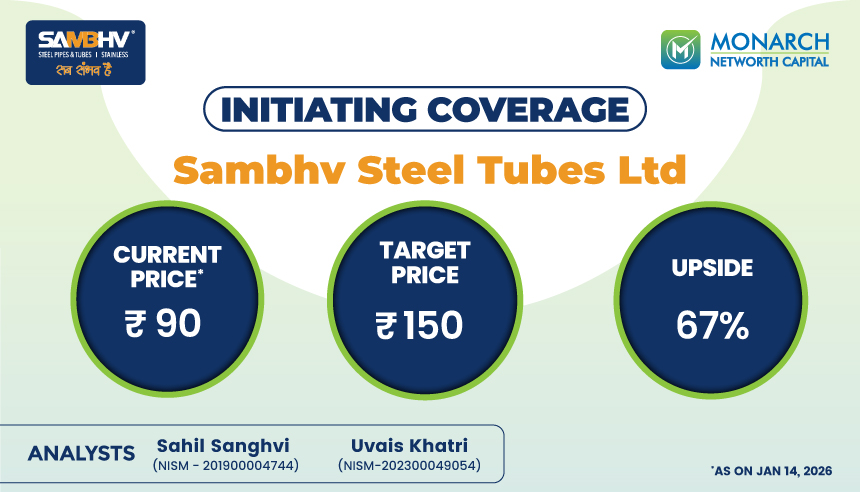
Sambhv Steel Tubes Ltd. - Mid-Metamorphosis and Mispriced - Initiating Coverage
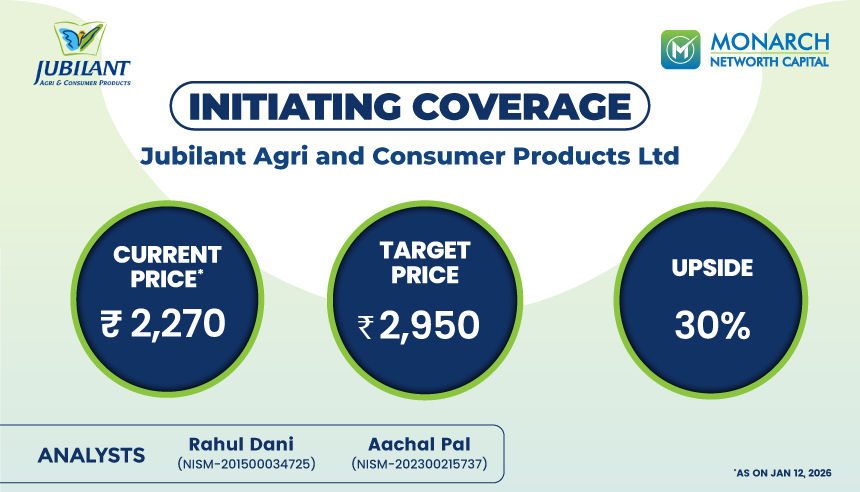
Jubilant Agri & Consumer Products - Emerging Adhesives Challenger - Initiating Coverage

Triveni Turbine Limited (TTL) - Driving the decentralized energy wave | Initiating Coverage Report
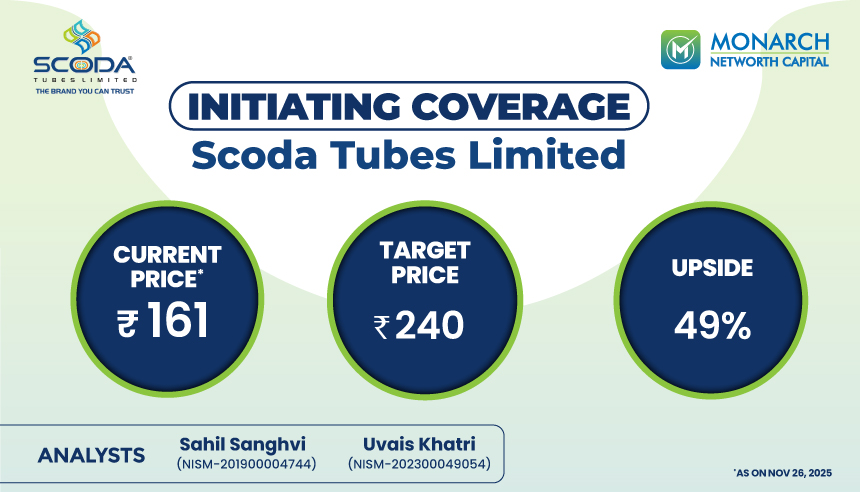
Scoda Tubes Ltd - Integrated, Accredited and tailwind driven | Initiating Coverage Report

Redington Ltd - Where technology meets scale | Initiating Coverage Report

TD Power Systems - Plugged in to the energy transition and AI boom - Initiating Coverage Report

What is an IPO? A Beginner’s Guide to Initial Public Offerings

Inox India Ltd - Cold Precision, Hot Opportunity | Initiating Coverage Report

Netweb Technologies Ltd - Beacon of India's AI dream | Initiating Coverage Report

ASK Automotive Ltd - No brakes on growth - Initiating Coverage Report

Goldiam International Ltd - Initiating Coverage Report

Mayur Uniquoters Ltd — Initiating Coverage Report