Carborundum Universal (CUMI) - Initiating Coverage Report

We initiate coverage on CUMI with a BUY rating, built on three pillars. First, the FY26 margin dip reflects losses at soon-to-be-divested overseas units (AWUKO, Foskor), not structural weakness — the domestic core keeps compounding, and we forecast consolidated EBITDA margin recovery through FY27-29E. Second, Ceramics is the key premiumization lever, riding semiconductor/EV-adjacent demand and mix enhancement. Third, upstream integration provides both a raw-material cost moat and captive downstream demand.
Overseas drag delays margin recovery:
The FY26 margin dip is largely self-inflictedand-fixable rather than structural: stripping out the AWUKO and Foskor one-offs, the consolidated business (Abrasives, Electrominerals, Ceramics) continues to compound at 11-12%, and our estimates build EBITDA margin recovery through FY27E-29E as the loss-making overseas drag disappears from the base. We flag, however, that this recovery is not yet visible in the trailing quarterly numbers: EBITDA margin has been choppy rather than cleanly recovering — from a Q1FY26 low of 9.9%, it rose to 12.5% by Q3FY26 before slipping back to 10.3% in Q4FY26 and a fresh low of 9.47% in Q1FY27. We read this volatility as consistent with negative operating leverage at AWUKO and Foskor still working through the base rather than
a resumed structural decline.
Ceramics — the key premiumization lever:
CUMI has the most credible premiumization optionality via its Ceramics segment, which earned a 24.7% EBITDA margin in FY26 — roughly 3x the Abrasives segment margin of 8.8%, comfortably the highest-margin pool in the portfolio — and is explicitly targeted by the management for continued mix-shift investment. As technical ceramics penetrate semiconductors, power-electronics and EV-adjacent applications and refractories migrate toward higher-value monolithic/composite formats, CUMI's Ceramics business is well-positioned to benefit from this structural shift.
Upstream Integration — A Structural Cost Moat:
CUMI's upstream integration in bauxite mining, alumina fusion and silicon-carbide manufacturing provides a natural
hedge against the raw-material price volatility that a China-dominated global grainsupply chain otherwise imposes on Indian abrasives makers — a moat neither Wendt (a pure downstream consumer of super-abrasive grit) nor GNO's non-SiC operations enjoy to the same degree. Importantly, this upstream integration is not merely a cost hedge but also supports a captive downstream market: in FY26, ~11.2% of Electrominerals’ gross sales were consumed internally in the production of abrasives and ceramics, underscoring the strategic linkage between CUMI’s upstream and downstream businesses.
Valuation and view:
We value CUMI on a sum-of-the-parts basis, attributing a 45.0x P/E and a 27.0x EV/EBITDA for the core business and separately valuing its stake in listed Wendt India, arriving at a Sept-2028E base-case target price of Rs 1,563, implying 30% upside from CMP. Our estimates indicate a FY26-29E revenue/EBITDA/APAT CAGR of 11.0%/27.3%/28.6%.
Company website: https://www.cumi-murugappa.com/
| Rating | BUY |
|---|---|
| CMP | INR 1,204 |
| Target Price | INR 1,563 |
| Upside | 30% |

Click to download the full Carborundum Universal (CUMI) Ltd. Initiating Coverage Report
Analyst:
- Mohit Surana - Senior Research Analyst, Institutional Equities (NISM-202300189881)
- Akhil Khanvilkar - Research Associate, Institutional Equities (NISM-202500193256)
Access comprehensive market insights and sector-wide analysis in our Research Centre.
FAQs on Carborundum Universal (CUMI) - Initiating Coverage Report
Carborundum Universal (CUMI) operates across abrasives, electrominerals and ceramics, with upstream capabilities in bauxite, alumina and silicon-carbide manufacturing. Its growth outlook is linked to potential normalization in overseas operations, premiumisation in ceramics and the benefits of vertical integration across the value chain.
What does Carborundum Universal do?
Carborundum Universal operates across abrasives, electrominerals and ceramics. Its businesses serve industrial applications and include capabilities ranging from upstream raw-material processing to downstream engineered products.
What are the key growth drivers for CUMI?
The key growth drivers identified in the research report include potential recovery in consolidated margins as overseas losses reduce, premiumisation in the Ceramics segment and continued growth in the domestic abrasives and electrominerals businesses.
Why is CUMI's Ceramics business important?
Ceramics is an important premiumisation opportunity for CUMI. The segment recorded a 24.7% EBITDA margin in FY26, compared with 8.8% for the Abrasives segment. Technical ceramics can serve specialized applications across semiconductors, power electronics and EV-related industries.
How can technical ceramics benefit CUMI?
Increasing adoption of technical ceramics in semiconductor and power-electronics applications can create opportunities for higher-value products. EV-related technologies and the migration of refractories toward more advanced formats may provide additional avenues for growth.
What is CUMI's upstream integration advantage?
CUMI has upstream capabilities spanning bauxite mining, alumina fusion and silicon-carbide manufacturing. This integration can provide greater control over raw-material economics and link upstream production with downstream abrasives and ceramics demand.
How does upstream integration benefit CUMI?
Upstream integration can act as a partial hedge against raw-material price volatility while also creating captive downstream demand. The research report notes that approximately 11.2% of Electrominerals' FY26 gross sales were consumed internally for abrasives and ceramics.
What affected CUMI's margins in FY26?
The research report attributes a significant portion of the FY26 consolidated margin pressure to losses at overseas businesses, particularly AWUKO and Foskor. Their potential divestment and reduction in losses are central to the report's projected margin-recovery thesis.
Are CUMI's margins already recovering?
The research report notes that quarterly EBITDA margins have remained volatile rather than showing a consistent recovery. Reported margins moved from 9.9% in Q1FY26 to 12.5% in Q3FY26, before declining to 10.3% in Q4FY26 and 9.47% in Q1FY27. Therefore, the projected recovery remains an estimate rather than an established trend.
What is the reported target price for Carborundum Universal?
The research report's stated September 2028E base-case target price for CUMI is ₹1,563. The valuation uses a sum-of-the-parts approach, including separate valuation considerations for the core business and CUMI's stake in listed Wendt India.
What are the reported FY26–FY29E growth estimates for CUMI?
The research report estimates FY26–FY29E revenue, EBITDA and adjusted PAT CAGR of 11.0%, 27.3% and 28.6%, respectively. These represent analyst estimates and are subject to business, industry, macroeconomic and execution risks.
What are the key risks for CUMI investors?
Key risks include prolonged weakness or losses in overseas subsidiaries, slower domestic demand, delayed margin recovery, raw-material volatility, weaker-than-expected ceramics demand and execution risks associated with restructuring and premiumisation initiatives.
Before You Trade, Strengthen Your Foundations with These Guides
- For a stronger understanding of indicators such as RSI, VWAP, and trendlines, check our 👉 Technical Analysis Fundamentals section.
- Want to refine your risk-reward planning? Explore our insights on 👉 Position Sizing & Risk Management Strategies.
Disclaimer: - You are advised to read our disclaimer here: https://www.mnclgroup.com/disclaimers
Related Blog

Ramkrishna Forgings Ltd. - Forging diversified growth levers | Initiating Coverage

TAJGVK Hotels & Resorts Ltd. - Well placed for a luxury-led growth cycle | Initiating Coverage
Carborundum Universal (CUMI) - Initiating Coverage Report


Grindwell Norton (GNO) - Initiating coverage Report


FIEM Industries Ltd. - Initiating Coverage Report

Goldiam International Ltd - Initiating Coverage Report

Mayur Uniquoters Ltd — Initiating Coverage Report

Indigo Paints - Industry-Leading Growth with Improving Margin Outlook | Initiating Coverage Report

Jubilant FoodWorks - Diversifying Growth Beyond Domino’s with Popeyes Scale-Up | Initiating Coverage Report

Bata India - Improving Consumer Sentiment; Margins to Improve Gradually | Initiating Coverage Report

Page Industries - Volume Recovery and Margins Stabilization Expected in Q2 | Initiating Coverage Report

Godrej Consumer Products - Initiating Coverage Report

Titan Company - Robust Growth; Improving Mix to Drive Margins | Initiating Coverage Report

Britannia - Demand Improvement Drives Healthy Volume Growth | Initiating Coverage Report

Bikaji Foods - Healthy Growth Despite a Challenging Environment | Initiating Coverage Report

Berger Paints - Healthy Growth Persist | Initiating Coverage Report


Metro Brands - Double-Digit Growth Sustained; Margin Profile Impacted | Initiating Coverage Report

Marico - Volume Momentum Accelerates; Margin Outlook Remains Resilient | Initiating Coverage

Kansai Nerolac - Strong Revenue Growth; Margin Recovery Expected | Initiating Coverage

Westlife Foodworld - Demand Recovery Drives SSSG; Input Cost Weigh on Margins | Initiating Coverage

Dabur India - Resilient Performance in Challenging Environment | Initiating Coverage

Asian Paints - Volume growth accelerates; Margin Guidance Maintained | Initiating Coverage

Colgate Palmolive - Premiumization Led Growth Continues; Initiate with Accumulate | Initiating Coverage

Hindustan Unilever - Volume-Led Recovery Continues; Cost Inflation Remains a Key Watchpoint | Initiating Coverage

Nestlé India Q1FY27 Review: Strong Growth & Accumulate Rating

Minda Corp. Ltd. - The Electronics Layer Beneath India’s Auto Cycle - Initiating Coverage

Travel Food Services Ltd l Gateway to India’s Aviation-Led Consumption Story - Initiating coverage

Ivalue Infoslutions Ltd - Architecting India's cybersecurity stack - Initiating coverage

Aditya Vision - Capturing the Next Wave of Bharat Consumption | Initiating Coverage Report

Sri Lotus Developers and Realty Ltd - Premium Redevelopment Compounder | Initiating Coverage Report
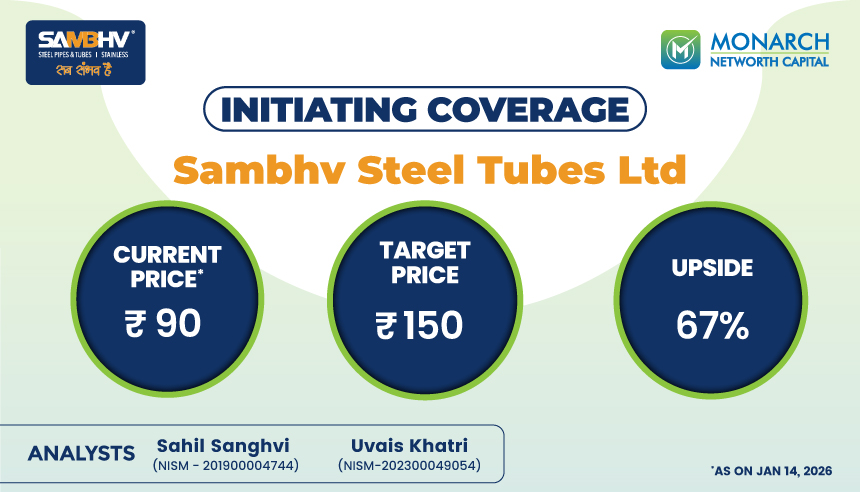
Sambhv Steel Tubes Ltd. - Mid-Metamorphosis and Mispriced - Initiating Coverage
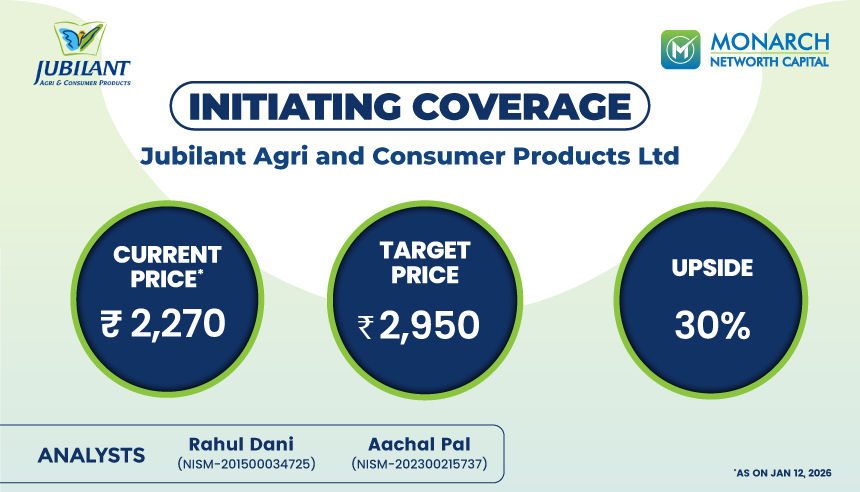
Jubilant Agri & Consumer Products - Emerging Adhesives Challenger - Initiating Coverage
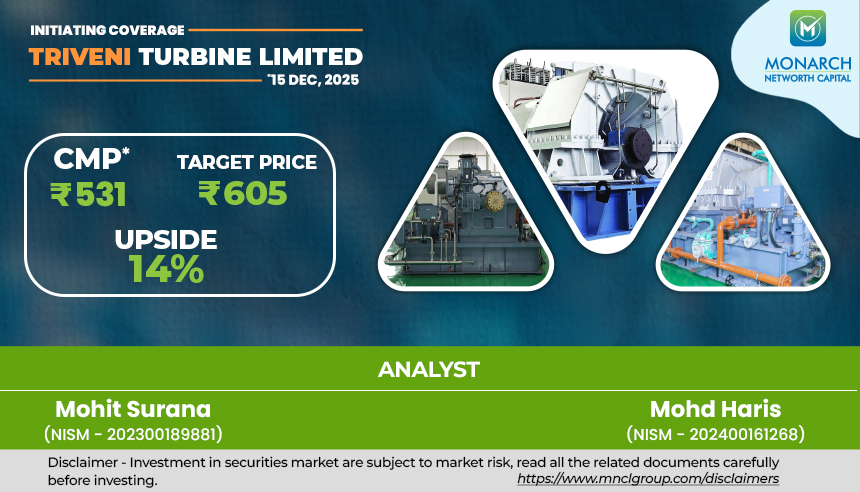
Triveni Turbine Limited (TTL) - Driving the decentralized energy wave | Initiating Coverage Report
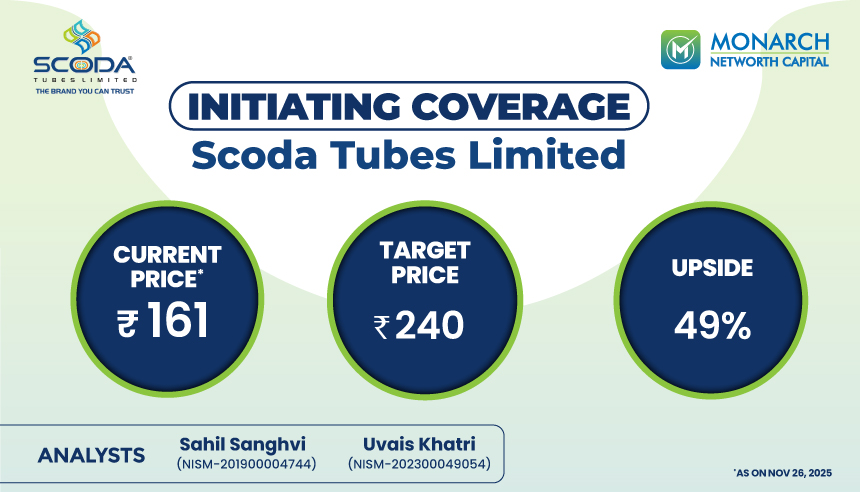
Scoda Tubes Ltd - Integrated, Accredited and tailwind driven | Initiating Coverage Report

Redington Ltd - Where technology meets scale | Initiating Coverage Report

TD Power Systems - Plugged in to the energy transition and AI boom - Initiating Coverage Report

What is an IPO? A Beginner’s Guide to Initial Public Offerings

Inox India Ltd - Cold Precision, Hot Opportunity | Initiating Coverage Report

Netweb Technologies Ltd - Beacon of India's AI dream | Initiating Coverage Report